Quebec’s 50 km/h Speed Limit for ATVs
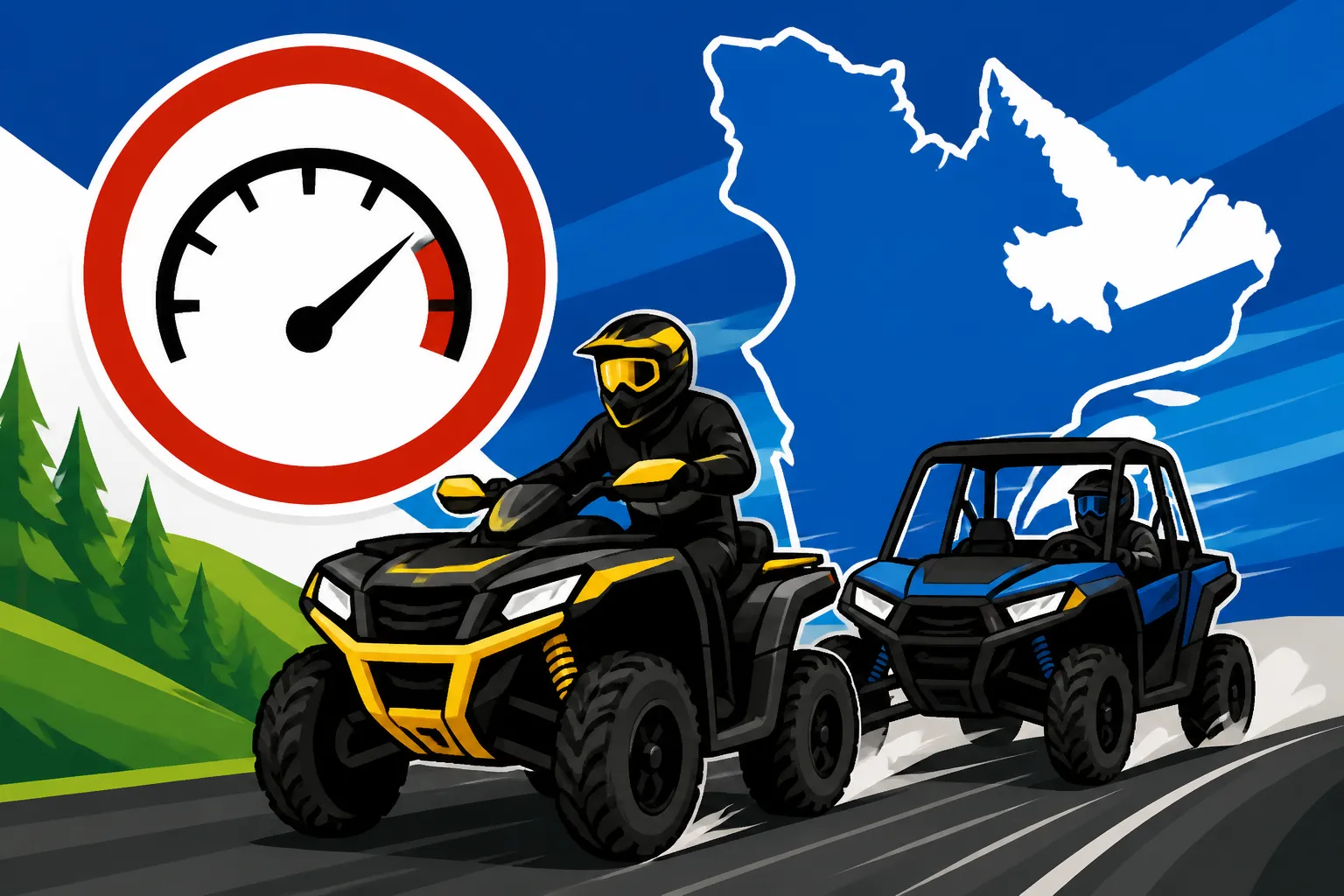
Riding an ATV in Quebec is an incredible experience, offering thousands of kilometres of breathtaking trails and stunning landscapes. However, it's not a free-for-all when it comes to speed, and many riders find the strict limits a real point of frustration, especially after a long week and wanting to blow off some steam. This guide is going to dive deep into Quebec's 50 km/h speed limit for ATVs, helping you understand not just what the limit is, but why it's there, where it applies, and what you need to do to stay on the right side of the law while still enjoying your ride.
Understanding Quebec's Off-Highway Vehicle Act (LVHR)
Before we talk about specific numbers, it’s crucial to understand the foundation of ATV regulations in Quebec. The provincial government takes off-highway vehicle safety very seriously, and the rules are designed to protect everyone – riders, other trail users, and even the natural environment itself. It’s not just about throwing numbers around; there’s a thoughtful, albeit sometimes frustrating, rationale behind it all.
The Legal Framework Behind the Speed Limit
The overarching legislation governing ATVs and other off-highway vehicles in Quebec is the Act respecting off-highway vehicles, often referred to by its French acronym, LVHR. This isn't just a suggestion; it's a comprehensive legal document that lays out everything from registration requirements to passenger rules, and yes, speed limits. When you register your ATV with the SAAQ and hit the trails, you're agreeing to abide by these rules, whether you've read them cover to cover or not. [Quebec's Off-Highway Vehicle Act and Your Papers] outlines many of these foundational elements.
This Act isn't static; it's been updated over the years to adapt to changing safety standards, vehicle technologies, and public expectations. The limits aren't arbitrary; they are the result of legislative review, public consultation, and an ongoing effort to balance the enjoyment of off-roading with the safety of all involved. So, when you see that 50 km/h sign, know that it's backed by provincial law, not just a local club's whim. It means that any enforcement officer, from the Sûreté du Québec to a local trail patrol officer, has the authority to ensure compliance with this specific speed limit.
It’s often a challenge for riders coming from other provinces or states where speed limits might be higher, or less strictly enforced, to adapt to Quebec's regime. The province has a distinct approach, and understanding that it's rooted in provincial law, rather than being mere guidelines, is the first step toward compliance. The LVHR sets the stage for every specific rule you encounter on a Quebec trail.
Why 50 km/h? Safety and Shared Spaces
"Why only 50 km/h?" is a question echoed by countless riders, especially those with powerful machines designed for much higher speeds. The answer, at its core, revolves around safety and the nature of Quebec's trail network. Quebec's vast network of trails, often maintained by the FQCQ (Fédération Québécoise des Clubs Quads), are rarely purpose-built, high-speed tracks. Instead, they often traverse varied terrain, including forests, farmlands, and sometimes even shared corridors.
Consider the diverse conditions you encounter on a typical Quebec trail. You might be riding on a smooth, wide section one moment, and then suddenly you're navigating a rocky climb, a tight turn, or a section with poor visibility. At higher speeds, reacting to unexpected obstacles – be it a fallen log, another rider, a deer, or a sudden change in trail surface – becomes significantly more difficult. The 50 km/h limit is designed to provide a reasonable margin for error, allowing riders more time to react and reducing the severity of accidents when they do occur.
Furthermore, these trails are often shared spaces. While some sections might be exclusively for ATVs, others might cross private land where landowners have granted access under specific conditions, or even run parallel to snowmobile trails in winter, requiring constant vigilance. The speed limit also helps mitigate noise pollution and dust, which are common concerns for residents living near trails. It's a balance designed to keep the trails open and enjoyable for everyone, without creating undue disturbance or danger.
What the 2021 Law Changed for Riders
Quebec's off-highway vehicle laws saw significant revisions on September 10, 2021, and these changes reinforced the existing speed limits, making enforcement clearer and, in some cases, expanding their application. Many riders might have felt these changes primarily impacted age limits or licensing, but the emphasis on responsible riding, including adherence to speed, was a core component. [Quebec's 2021 Law and What Changed] provides a full overview, but let’s focus on its implications for speed.
The amendments to the LVHR specifically clarified aspects of road access and crossings, which often means riders transition from private trails to public thoroughfares. In these scenarios, maintaining a controlled speed is absolutely paramount. The law didn't necessarily lower the speed limit, but it certainly underlined the importance of adhering to it everywhere it applies, especially as part of a broader push for increased safety and accountability on the trails. This means that ignorance of the law is truly no excuse; the expectation is that riders are aware of and comply with the regulations.
This legislative refresh also empowered various enforcement bodies, including the Sûreté du Québec and provincial wildlife officers, to more effectively monitor and ticket violations. The message was clear: Quebec is committed to maintaining a safe and responsible off-roading environment, and speed control is a fundamental part of that commitment. Riders were put on notice that the rules were not just on paper, but would be actively enforced.
Where the 50 km/h Limit Applies to ATVs
It's one thing to know what the speed limit is, but it's another entirely to understand where it applies. Many riders mistakenly believe the 50 km/h limit is only for certain sections of trail, or that it magically disappears when they feel like no one is watching. In Quebec, the 50 km/h speed limit for ATVs is widely applicable across most official off-highway vehicle infrastructures.
Federated Trails and Designated Pathways
The vast majority of your riding in Quebec will likely be on trails that are part of the FQCQ network. These are the main arteries of off-road adventure, connecting regions and offering hundreds, if not thousands, of kilometres of riding pleasure. On these [Quebec ATV Trails: The FQCQ Network], the 50 km/h speed limit is the standard. This isn't just a suggestion; it's a rule that applies to virtually every metre of federated trail.
These trails are meticulously maintained by dedicated club volunteers, but they are designed for exploration and enjoyment, not high-speed racing. You'll often see signage reminding riders of the limit, especially as you enter new sections or approach areas with increased risk, like blind curves or residential zones. The federated trails are shared not just with other ATV riders, but sometimes also with hikers, cyclists (in non-winter months), and even wildlife. Maintaining a consistent, safe speed is crucial for everyone's well-being on these pathways.
Even on what might seem like wide-open, perfectly straight sections, the 50 km/h limit remains in effect. The network's design, the presence of countless private land crossings, and the overall safety mandate mean that this speed is considered the maximum for responsible riding. Don't be fooled by the open stretch; a sharp turn or unexpected obstacle could be just around the bend.
Municipal Roads and Controlled Crossings
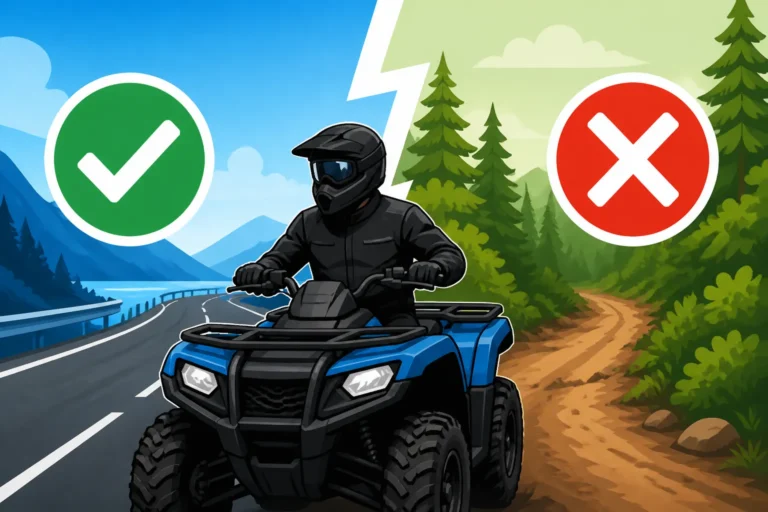
Sometimes, to link up trail sections or access services like gas stations and restaurants, ATV riders in Quebec might need to use short stretches of municipal roads or cross specific highways. This is a point of frequent confusion for many, as road rules often differ from trail rules. While general road access for ATVs is highly restricted, limited access is permitted under very specific conditions, usually for short distances and clearly marked sections. [Quebec Municipal Road Access Up to 1 Kilometre] details these particular allowances.
When an ATV is allowed on a municipal road, even for a brief stretch of one kilometre or less, the 50 km/h limit usually still applies as the maximum speed for the off-highway vehicle itself, even if the posted speed limit for cars on that road is higher. In many cases, ATVs are expected to ride on the shoulder, if one exists, or as far to the right as safely possible, and maintain a speed that is safe for the conditions, which will often mean less than 50 km/h. The intent is to transition safely and quickly from one trail section to another, not to integrate fully into road traffic.
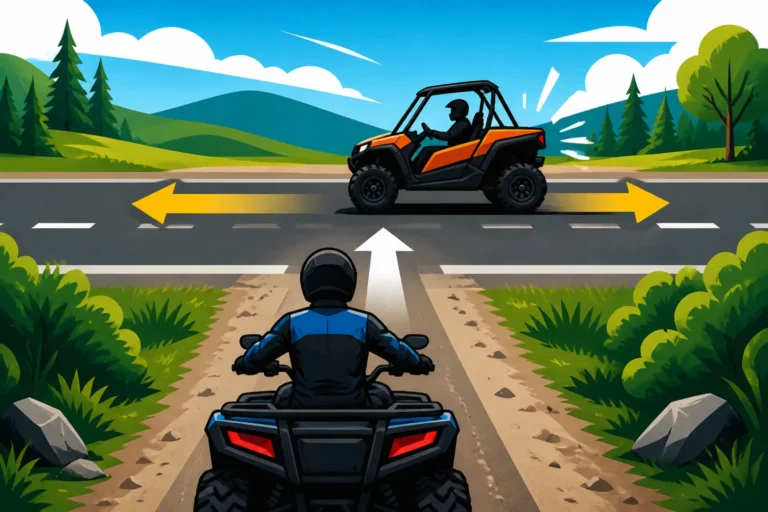
Controlled crossings, where an ATV trail intersects a public road, are particularly critical zones. Here, riders must come to a complete stop, yield to all road traffic, and cross at a right angle, often with very strict sightline requirements. The speed limit of 50 km/h applies up to the crossing point, but during the actual crossing, your speed should be minimal and extremely cautious. The focus here is on visibility and the ability to stop instantly if necessary. These are not areas for testing your machine's acceleration or speed.
Exceptions and Special Circumstances
Are there any exceptions to the 50 km/h rule? Generally, no, not for federated trails or approved municipal access. The 50 km/h is largely considered the province-wide maximum for ATVs. However, there are nuances to consider regarding lower speed limits and specific conditions. For instance, in designated areas like parking lots, near service areas, or within campgrounds, the speed limit will often be significantly lower, sometimes as little as 10-20 km/h, to ensure pedestrian safety and minimize disruption. Always pay attention to local signage.
Another "exception" comes into play with specific machine types. While standard ATVs are capped at 50 km/h, some utility-focused off-highway vehicles, like certain side-by-sides, might have different operational parameters. However, on federated trails, even these machines are generally expected to adhere to the 50 km/h rule unless specifically stated otherwise. It's crucial not to confuse the machine's capability with the legal speed limit on a given trail. Always check the specific regulations for your vehicle type, especially if you're riding a [Quebec Rules for a Side-by-Side Driver].
Finally, while the 50 km/h is the maximum, conditions often dictate that you ride much slower. Heavy rain, mud, icy patches, low visibility due to fog or dust, or extremely technical terrain should always prompt you to reduce your speed well below the legal maximum. Safety always comes first, and the maximum legal speed should never be interpreted as a minimum or a recommended speed for all conditions.
The Rationale for Speed Restrictions
For many riders, the 50 km/h speed limit feels restrictive, especially when their powerful machines are capable of so much more. It can be frustrating to hold back when the trail looks clear and open. However, these restrictions aren't arbitrary. They are deeply rooted in a desire to balance the thrilling experience of off-roading with crucial considerations for safety, environmental protection, and community harmony.
Protecting Riders and Other Trail Users
The primary reason for the 50 km/h speed limit is undoubtedly safety. At higher speeds, the risk of losing control, especially on varied and unpredictable off-road terrain, increases exponentially. A sudden rut, a hidden rock, a patch of loose gravel, or an unexpected turn can all become far more dangerous when travelling quickly. The laws of physics dictate that stopping distances increase dramatically with speed, and the force of impact in a collision rises even more steeply.
This isn't just about protecting the rider. Quebec's trail network is often used by a variety of people, including other ATV riders, side-by-side operators, and in some areas, even hikers or snowmobilers on shared winter trails. An out-of-control ATV travelling at excessive speeds poses a severe threat to anyone in its path. Imagine encountering a group of families or younger riders around a blind corner; a 50 km/h limit provides more time to react and avoid a catastrophic incident.
The trails also often feature varying levels of maintenance and conditions. While clubs work tirelessly, perfect trail conditions year-round are impossible. Lower speeds allow riders to better assess the terrain ahead, anticipate hazards, and react safely, reducing the likelihood of serious injury to themselves and others. It’s a collective safety measure designed to make the trails enjoyable for everyone, not just the fastest riders.
Minimizing Environmental Impact and Noise
While safety is paramount, speed limits also play a significant role in environmental stewardship and minimizing disturbances. Excessive speed, particularly on certain types of terrain, can lead to increased erosion. When ATVs churn up loose soil at high velocities, it can displace more earth, damage trail surfaces, and contribute to runoff into nearby waterways, impacting local ecosystems. It's a subtle but important aspect of sustainable trail use.
Furthermore, noise pollution is a major concern for many communities and landowners adjacent to ATV trails. While aftermarket exhausts can certainly amplify this issue, even stock machines generate considerable noise at high speeds. This can disturb local residents, livestock, and wildlife. By enforcing a 50 km/h limit, the province aims to keep noise levels to a more tolerable minimum, reducing complaints and helping to ensure that trail access remains viable in the long term.
Consider a hot summer day near a cottage or a farm. The constant drone of high-speed ATVs can be a significant annoyance. By keeping speeds in check, the overall sound footprint is lessened, which contributes to better relations between riders and non-riders. This careful balance is what allows the extensive trail network to exist, as it mitigates the negative impacts on those who live and work near these recreational corridors.
Maintaining Harmony with Local Communities
Quebec's ATV trail system is unique in that it relies heavily on goodwill and agreements with private landowners and local municipalities. Many trails crisscross private property, and continued access is contingent on riders demonstrating respect for these lands and their owners. Speeding, especially near homes, farms, or public areas, is one of the quickest ways to erode this goodwill.
Local communities often have specific concerns about ATVs, ranging from safety for children and pets to noise and property damage. The 50 km/h limit, particularly when applied near inhabited areas or road crossings, is a direct response to these concerns. It's a legislative effort to encourage responsible behaviour that minimizes negative interactions and fosters a sense of shared responsibility. [Quebec's 100 Metre Rule Near Homes] illustrates another regulation aimed at this very harmony.
When riders consistently adhere to speed limits and other regulations, it builds trust within communities, making it more likely that landowners will continue to grant access and municipalities will support the trail network. Conversely, widespread disregard for speed limits can lead to increased complaints, stricter local by-laws, and even the closure of vital trail sections. The speed limit, in essence, is a social contract designed to preserve the future of off-roading in Quebec by ensuring it's conducted respectfully and safely within the broader community fabric.
Consequences of Exceeding the Speed Limit
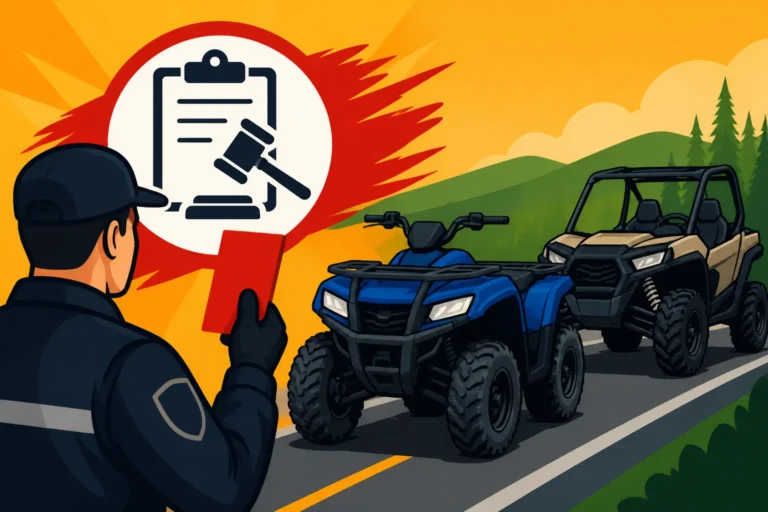
Breaking the speed limit on Quebec's ATV trails isn't just a minor infraction; it carries real consequences. Riders often underestimate the vigilance of trail patrols and law enforcement, or they simply believe they won't get caught. But the system is designed to identify and penalize those who disregard the rules, and the fines can be steep, impacting more than just your wallet.
Fines and Penalties for Speeding on Trails
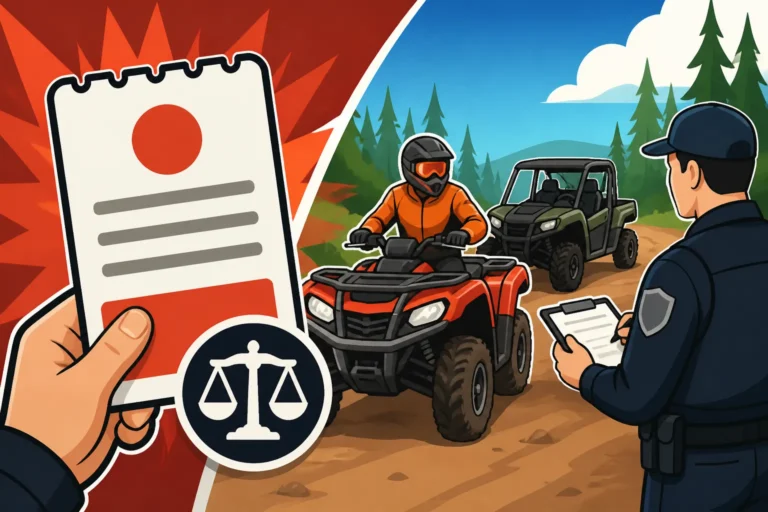
Quebec's penalties for off-highway vehicle violations are clearly defined and can quickly add up. If you're caught exceeding the 50 km/h speed limit, you can expect a fine. These aren't just token amounts; they are designed to be a deterrent. [Quebec Speeding Fines From $90] outlines the starting point for these penalties, but they escalate significantly depending on how much you exceed the limit.
The fines are often tiered. For instance, being caught going slightly over the limit might result in a base fine, but exceeding it by a larger margin, say 20 km/h over, will incur a substantially higher penalty. This scaling means that the faster you go, the more you pay. This system reflects the increased danger posed by higher speeds. A single instance of speeding could easily cost you hundreds of dollars once the base fine, administrative fees, and victim compensation surcharges are all factored in.
These fines are issued by various authorities, including provincial police (Sûreté du Québec), local municipal police, and even designated trail patrol officers who have the authority to enforce the LVHR. There's no escaping the consequences by simply being on a remote trail. The system is comprehensive, and enforcement efforts are sustained throughout the riding season.
Additional Sanctions and Impact on Your Record
Beyond monetary fines, there can be other, less immediate, but equally impactful sanctions. In Quebec, certain off-highway vehicle violations, including significant speeding infractions, can sometimes lead to demerit points being added to your driver's license, even though you might not be driving a "road legal" vehicle. This is a common misunderstanding: what happens on the trail can affect your ability to drive your car or truck on the road.
Accumulating demerit points can lead to increased insurance premiums for all your vehicles, and if you accumulate too many points, it could even result in the suspension of your driver's license. This means that a moment of thrill-seeking on an ATV could end up affecting your daily commute, your work, or your ability to transport your family. It's a harsh reminder that responsible riding extends beyond the trail itself.
In more egregious cases, or for repeat offenders, authorities might even have the power to seize your ATV temporarily, or you could face more severe court-ordered penalties. [Quebec Speeding Fines Over $660] indicates the upper range of monetary penalties, and such significant fines often come with closer scrutiny of a rider's overall conduct. These types of incidents can also impact your standing with local clubs and the FQCQ, potentially affecting your ability to purchase trail passes in the future if your conduct is deemed reckless.
The Role of Trail Patrols and Local Authorities
Who exactly enforces these speed limits? It's a multi-pronged approach in Quebec. The Sûreté du Québec (SQ) has full authority over the entire province, including off-highway vehicle trails. They conduct regular patrols, often in marked ATVs or snowmobiles, and are well-versed in the LVHR. Seeing an SQ officer on the trail should be a clear signal to check your speed.
In addition to provincial police, many local municipalities have their own police forces that may patrol off-highway vehicle access points or specific trail sections within their jurisdiction. These officers also have the power to issue tickets for speeding. Furthermore, the FQCQ, through its member clubs, organizes and trains volunteer trail patrols. While these patrols might not always have the same direct ticketing authority as police, they work closely with law enforcement and can report violations, gather evidence, and often deter speeding through their visible presence. [What a Patrol Can Ask to See] details some of their powers.
These patrols and authorities are not out to ruin your fun. Their primary goal is to ensure safety and compliance with the law. They are often responding to complaints from landowners, residents, or other riders, or they are conducting proactive enforcement in high-risk areas. Their presence is a constant reminder that the rules are being upheld, and that riders are expected to respect the legal speed limits at all times.
Best Practices for Safe and Compliant Riding
Navigating Quebec's ATV trails means embracing not just the adventure, but also the responsibility that comes with it. Adhering to the 50 km/h speed limit is a fundamental part of safe and compliant riding. It's about more than just avoiding a ticket; it's about making smart choices that protect yourself, your fellow riders, and the future of the sport in Quebec.
Adjusting Your Riding Style to the Limit
The transition from a wide-open field or a private property where speed isn't a concern to a federated trail with a strict 50 km/h limit can be jarring. It requires a conscious adjustment in your riding style. Instead of focusing on acceleration or top speed, shift your attention to smooth throttle control, precise steering, and effective braking. This doesn't mean the ride has to be boring; it simply means redefining what "fun" on the trail looks like.
Practice riding at a consistent 40-50 km/h, even when the trail seems to invite more speed. This allows you to better appreciate the scenery, anticipate upcoming turns and obstacles, and maintain a safe following distance from other riders. It also significantly reduces rider fatigue over longer distances, as you're not constantly fighting the urge to go faster or making abrupt corrections. Think of it as a rhythmic, flowing ride rather than a series of bursts.
Furthermore, develop a habit of "reading the trail" ahead. Look further down the path for changes in terrain, potential hazards, or upcoming signage. This proactive approach allows you to adjust your speed smoothly and predictably, rather than having to brake hard at the last minute. This isn't just about complying with the law, but about fostering a safer, more enjoyable, and less stressful riding experience for everyone.
Using Technology for Speed Monitoring
In today's world, technology can be a huge asset in helping you stay compliant. While your ATV's built-in speedometer is the primary tool, it's not always perfectly accurate, especially if you've changed tire sizes or made other modifications. Many riders find it beneficial to use secondary methods for speed monitoring.
GPS devices, whether dedicated units or smartphone apps, can often provide a more precise speed reading. Many popular trail mapping apps or dedicated GPS units designed for off-roading will display your current speed. By cross-referencing this with your ATV's speedometer, you can get a better sense of your true velocity and make adjustments as needed. Some riders even use external digital speedometers that are easy to read and highly accurate.
Consider attaching a small, easily visible display to your handlebars that shows your GPS speed. This allows for quick checks without having to look down at your main console or fumble with a phone. Tools like these are not about increasing speed, but about ensuring you know your speed, so you can confidently stay within the 50 km/h limit. Products from brands like SuperATV, for instance, offer a variety of accessories, including durable mounts for GPS units or enhanced dash components, that can aid in better visibility of your speed and navigation.
Respecting Signage and Local By-Laws
Quebec's trail system is generally well-marked, and signage is your best friend when it comes to compliance. Pay close attention to all trail signs, especially those indicating speed limits, upcoming hazards, or changes in trail status. While the 50 km/h is the general rule, some specific areas, like those near residential zones, schools, or environmentally sensitive areas, might have even lower posted limits.
Local municipalities also have the power to enact their own by-laws concerning off-highway vehicles within their jurisdiction. While the LVHR sets the provincial standard, a municipality might have more restrictive rules for certain road sections or specific zones. Always be on the lookout for local signage that indicates these variations. A sign that says "VTT 30 km/h" or "Zone résidentielle – Vitesse réduite" means you need to slow down even more than the provincial 50 km/h.
It’s not just about speed signs either. Pay attention to directional arrows, warning signs for sharp turns or steep grades, and signs indicating shared trails. These all contribute to a safe riding environment, and respecting them is part of being a responsible rider. Disregarding signage is not only illegal but also shows a lack of respect for the clubs, landowners, and communities that make the trail system possible.
Equipping Your ATV for Compliance and Safety
Riding within the 50 km/h limit in Quebec isn't just about throttle control; it's also about ensuring your machine is properly equipped to make that compliance easier and safer. A well-maintained and appropriately outfitted ATV contributes significantly to your ability to ride responsibly and enjoy the trails without worry.
Maintaining Your Machine's Speedometer Accuracy
Your ATV's speedometer is your primary tool for monitoring your speed. However, several factors can affect its accuracy. The most common culprit is a change in tire size. If you've installed larger or smaller tires than stock, your speedometer will likely read inaccurately. Larger tires will make your speedometer read slower than your actual speed, potentially leading you to unknowingly exceed the limit. Smaller tires will do the opposite.
It’s a good idea to periodically verify your speedometer's accuracy. You can do this by comparing it against a reliable GPS unit (as discussed earlier) or even by driving a measured distance at a steady speed and timing it. If you find a significant discrepancy, consider recalibrating your speedometer, if your machine allows it, or simply make a mental note of the offset. For example, if your speedometer reads 40 km/h but your GPS shows 50 km/h, you'll know to aim for a lower reading on your dash.
Regular maintenance also plays a role. Ensure your speed sensor is clean and free of debris, and that all electrical connections are sound. Any issues here could lead to erratic or inaccurate readings, making it harder for you to consistently stay within the legal limit. A reliable speedometer is your first line of defense against accidental speeding.
Choosing Tires and Accessories for Controlled Riding
While powerful engines get a lot of attention, your tires are where the rubber meets the trail, quite literally. Choosing the right tires can impact not just traction and handling, but also your ability to maintain controlled speeds. Aggressive, deep-lugged tires are excellent for mud, but on hard-packed trails, they can sometimes feel unstable at higher speeds, requiring more effort to keep the machine tracking straight.
For general trail riding in Quebec, consider all-terrain tires that offer a good balance of grip across various surfaces (rock, dirt, light mud) and predictable handling. A tire that provides good feedback and stability will make it easier to maintain a steady 50 km/h without feeling like the machine is fighting you. This kind of stability allows for smoother throttle input and less twitchy steering, both crucial for controlled riding.
Beyond tires, certain accessories can aid in compliance and safety. A good quality set of mirrors, for example, allows you to see what's behind you, which is essential when slowing down or pulling over. Proper lighting, including headlights and tail lights, is not just a legal requirement but also crucial for visibility, especially during dawn, dusk, or in tree-covered sections where shadows can play tricks. [Quebec Equipment Checks by Patrols] often include these items. While SuperATV is known for performance parts, they also offer accessories like mirrors and lighting kits that enhance both safety and compliance, helping riders maintain visibility and control.
Safety Gear Beyond the Legal Minimum
While not directly related to speed limits, adequate safety gear is inextricably linked to safe riding, especially if an unexpected situation arises despite your best efforts to maintain a safe speed. Quebec has mandatory helmet rules, and for good reason: a helmet is your most critical piece of safety equipment. Always wear a helmet that meets provincial standards, and ensure it fits properly.
But don't stop there. Beyond the helmet, consider wearing protective eyewear (if your helmet doesn't have a visor), gloves, long pants, a long-sleeved shirt or riding jacket, and sturdy over-the-ankle boots. This gear provides vital protection against branches, flying debris, and scrapes or bruises in the event of a minor fall. While the 50 km/h limit reduces the severity of potential impacts, even low-speed incidents can result in injuries if you're not properly protected.
Investing in quality riding gear is an investment in your own safety and comfort. It allows you to focus on the trail and your speed, rather than worrying about potential hazards. It's about being prepared for anything, even when you're doing everything right by sticking to the speed limit.
Frequently Asked Questions About ATV Speed in Quebec
Even after understanding the core rules, riders often have specific questions that pop up, especially when comparing different types of off-highway vehicles or considering the experience of visitors. Let's tackle some of those common queries.
How Does This Compare to Snowmobile Limits?
This is a very common question, especially in Quebec, where snowmobiling is just as popular as ATV riding in the winter months. Many riders assume the rules are identical or very similar. However, there's a significant difference: snowmobiles in Quebec typically have a higher speed limit on federated trails, often set at 70 km/h.
Why the difference? Snowmobiles operate on a different surface (snow and ice) and are designed with different handling characteristics. Snowmobile trails are generally groomed wider and straighter, with fewer sudden obstacles or sharp turns than typical ATV trails. The snow surface, while offering less friction for braking, also often provides a more consistent, predictable riding environment compared to the varied and often rugged terrain found on summer ATV trails. The average speeds and dynamics of snowmobiling lead to a different safety profile, which is reflected in the higher limit.
It's crucial not to confuse these two sets of rules. Just because you can go 70 km/h on a snowmobile trail in winter doesn't mean you can do the same on an ATV trail in summer. Always adhere to the specific limit for the vehicle you are operating and the season you are in.
What About Side-by-Sides and UTVs?
Side-by-sides (SxS) and Utility Terrain Vehicles (UTVs) have gained immense popularity, offering a different riding experience with their car-like controls and often greater cargo and passenger capacity. In Quebec, these machines, often categorized under the broader "off-highway vehicle" umbrella, generally fall under the same 50 km/h speed limit as traditional ATVs on federated trails.
While many side-by-sides are capable of much higher speeds, especially the sportier models, the provincial regulations prioritize the safety of all trail users and the conditions of the shared trail network. The rationale discussed earlier – diverse terrain, shared spaces, environmental impact, and community harmony – applies equally to side-by-sides. [Quebec Rules for a Side-by-Side Driver] further clarifies the specific age and licensing requirements, but the speed limit is consistent.
It's important for side-by-side operators not to assume that their machine's greater stability or enclosed cab allows for higher speeds on trails. The rules are in place for the trail system itself, not just the capabilities of individual vehicles. Always consult the latest LVHR details or local club rules for any specific nuances regarding side-by-sides, but generally, expect to adhere to the 50 km/h maximum.
The Impact on Visiting Riders
Visitors to Quebec, whether from other Canadian provinces or the United States, often express surprise or frustration with the 50 km/h speed limit. In many jurisdictions, ATV trails might have higher limits, or enforcement might be less stringent. However, Quebec's laws apply universally to anyone operating an off-highway vehicle within its borders.
Ignorance of the law is not an excuse. As a visitor, it is your responsibility to understand and comply with all of Quebec's off-highway vehicle regulations, including the speed limits, registration requirements, and insurance mandates. Authorities are just as likely to ticket a visitor as a local resident for speeding. In fact, visitors might face additional complications if they receive a ticket, as dealing with an out-of-province infraction can be more cumbersome.
If you're planning a trip to Quebec, take the time to familiarize yourself with the full suite of regulations well in advance. This includes understanding trail pass requirements, age restrictions, and compulsory safety gear. The goal is to have a safe and memorable trip, and that starts with respecting the local laws and the unique trail system Quebec has to offer. Enjoy the scenery, enjoy the camaraderie, and let the 50 km/h limit guide you to a relaxed and compliant ride.
Disclaimer
This article is for general informational purposes only and does not constitute professional advice. Laws, prices and regulations vary by location and change over time. Consult a qualified professional for guidance on your specific situation.