Financing a Machine Through a Dealer
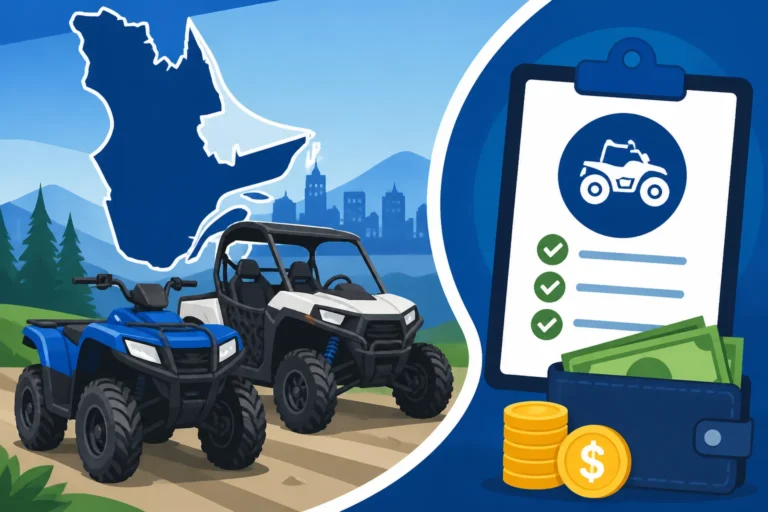
Many of us dream of hitting the incredible Quebec trails on a brand new ATV or side-by-side, but the reality is that paying for a machine outright isn't always feasible. Dealer financing offers a convenient pathway to ownership, allowing you to spread the cost over time, and this guide will walk you through everything you need to know about financing your off-road machine directly through a Quebec dealer.
The Ins and Outs of Financing Your Off-Road Machine Through a Dealer
Buying an ATV or side-by-side in Quebec is a thrilling prospect, whether you're eyeing a new machine or a pre-owned one from a dealership. For many, paying cash upfront isn't an option, and that's where dealer financing comes in. It can seem like a straightforward solution, but understanding how it truly works can save you headaches and money down the line. It's not just about agreeing to a monthly payment; it's about understanding the entire package.
How Dealer Financing Typically Works in Quebec
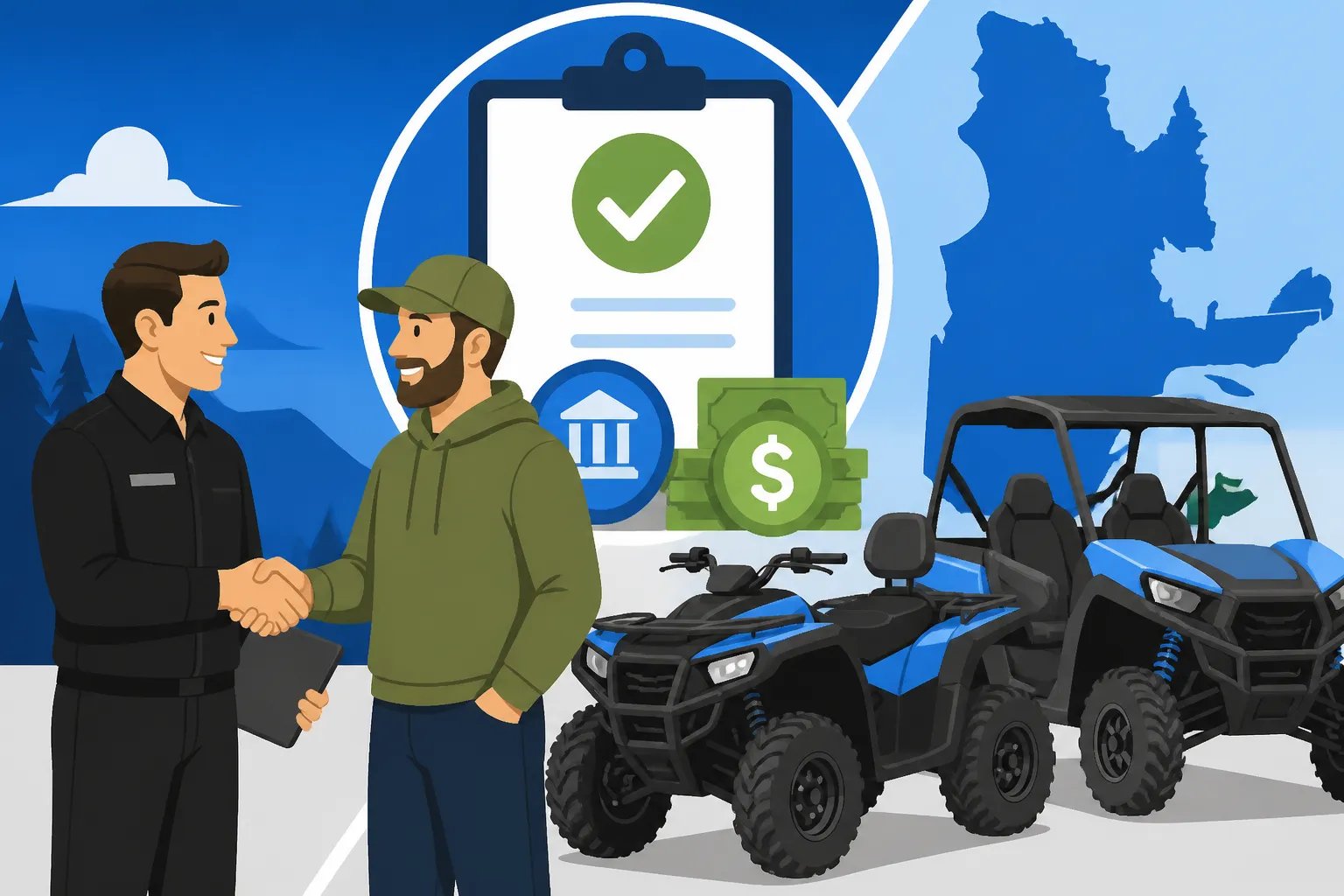
When you decide to finance your off-road machine through a dealer, you're essentially applying for a loan that the dealership facilitates on your behalf. Most dealerships in Quebec have established relationships with various financial institutions – think big banks, specialized recreational vehicle lenders, or even the manufacturer's own finance division. They act as the middleman, taking your application and submitting it to their network of lenders to find an approval.
The process usually starts with a credit application, where you'll provide personal and financial information. The lender then reviews your credit history, income, and debt-to-income ratio to assess your eligibility and determine the interest rate and loan terms they're willing to offer. While it might feel like a single transaction at the dealership, remember that you're entering into two agreements: one to purchase the machine from the dealer, and another, separate loan agreement with the financial institution that provides the funds. It's a convenient one-stop shop, but it's important to differentiate these two aspects.
You'll typically be asked for a down payment, which can range from a small percentage of the total cost to a more substantial amount. The larger your down payment, the less you'll need to borrow, which can result in lower monthly payments and less interest paid over the life of the loan. The dealer will then present you with the approved loan terms, including the interest rate (often expressed as an Annual Percentage Rate or APR), the loan term (how many months you'll be paying), and your estimated monthly payment. It's crucial to ensure all the figures line up with what you've discussed and what you're comfortable with.
The Good and the Not-So-Good: Pros and Cons of Dealer Financing
Dealer financing, like any financial product, comes with its own set of advantages and disadvantages. It's important to weigh these carefully against your personal financial situation and goals before committing. Many riders appreciate the ease of it all, but being a truly informed consumer means looking at the full picture.
Advantages:
- Convenience: This is often the biggest draw. You can pick out your machine, apply for financing, and often get approved all in one place, sometimes even on the same day. This saves you the legwork of seeking out a loan separately.
- Special Offers: Dealers sometimes have access to manufacturer-backed financing promotions, such as low or even zero-percent interest rates for a limited term, especially on new models. These can be very attractive if your credit qualifies.
- Builds Credit: For those looking to establish or improve their credit history, consistently making on-time payments on an ATV loan can be beneficial.
- Streamlined Paperwork: The dealer's finance department often handles all the necessary documentation, including drafting the sales contract and liaising with the lender. They'll also typically take care of the initial [Quebec SAAQ Steps After a Dealer Purchase] for registration, which is a huge time-saver.
Disadvantages:
- Potentially Higher Interest Rates: While special offers exist, general dealer financing rates can sometimes be higher than what you might secure through your own bank or a credit union for a personal loan. This is because dealers work with preferred lenders, who might not always offer the absolute lowest rates available to you.
- Less Negotiation Power: When you're bundling the purchase and financing, you might find it harder to negotiate aggressively on both the price of the machine and the financing terms simultaneously.
- Limited Lender Options: You're typically limited to the lenders the dealership partners with, which might not include every institution that could offer you a better deal.
- Additional Fees: Be wary of [Quebec Dealer Fees to Expect] such as administration fees, documentation fees, or extended warranty pitches that can be rolled into the financed amount, increasing your total cost of borrowing.
Here's a quick comparison to help you visualize the trade-offs:
| Feature | Dealer Financing | Self-Arranged Financing (e.g., Bank Loan) |
|---|---|---|
| Convenience | High; one-stop shop for purchase and loan | Moderate; separate processes for buying and financing |
| Rate Potential | Potentially low promotional rates, or higher standard rates | Often competitive rates, but requires shopping around |
| Lender Options | Limited to dealer's partners | Wide; you choose your lender |
| Negotiation | Can be harder to separate machine price from finance terms | Easier to negotiate machine price and loan terms separately |
| Speed of Process | Often quick approval and delivery | Can be slower if you need to secure a loan first |
| Credit Impact | Positive with on-time payments | Positive with on-time payments |
Understanding Your Financing Agreement Before You Sign
Before you get swept up in the excitement of a new machine, it's absolutely critical to understand every detail of your financing agreement. This isn't just a formality; it's a legal contract that obligates you to certain payments and terms for years to come. Skipping the fine print can lead to expensive surprises.
Key Terms and Conditions to Watch For
When reviewing your financing agreement, several key terms will dictate the overall cost and structure of your loan. Don't be afraid to ask questions until you fully understand each point. Remember, once you sign, these terms are legally binding.
- Annual Percentage Rate (APR): This is perhaps the most important figure. It's the true cost of borrowing money annually, expressed as a percentage. It includes not just the interest rate but also any other fees wrapped into the loan. A lower APR means less money paid in interest over time.
- Loan Term: This is the duration of your loan, typically expressed in months (e.g., 60 months, 72 months). A longer loan term means lower monthly payments but generally results in paying more in total interest over the life of the loan. A shorter term means higher monthly payments but less overall interest.
- Total Cost of Borrowing: Your financing agreement should clearly state the total amount you will pay over the life of the loan, including the principal (the amount borrowed) and all interest. This figure gives you a clear picture of the true cost of your machine.
- Payment Schedule: This outlines when your payments are due (e.g., monthly, bi-weekly) and the exact amount of each payment. Make sure this aligns with your budget.
- Prepayment Penalties: Some loans have penalties if you pay off the loan early. Check if your agreement allows for penalty-free lump sum payments or early payoff, which can save you a significant amount in interest.
- Late Payment Fees: Understand the charges for missed or late payments. These can add up quickly and negatively impact your credit score.
- Default Clauses: This section defines what constitutes a default on the loan (e.g., missing multiple payments) and the consequences, which can include repossession of the machine.
While dealers provide their own contracts, understanding the components of a well-drafted loan agreement, perhaps even by looking at templates on sites like LawDepot, can empower you to ask the right questions and spot anything unusual. Being proactive here can make a significant difference in your financial peace of mind.
What Dealerships Are Required to Disclose
Consumer protection laws in Quebec dictate that dealerships must be transparent about the terms of a financing agreement. This is known as "Truth in Lending" and it's designed to ensure you, the consumer, are fully aware of what you're signing. The goal is to prevent hidden costs and ensure clarity.
Dealerships must clearly disclose the total cost of the loan, not just the attractive monthly payment. This includes the full purchase price of the ATV or side-by-side, any added accessories or services (like extended warranties or theft protection), all financing charges (interest, administrative fees), and the total amount you will pay back over the loan term. They must also itemize all fees that are part of the transaction, such as [Preparation Fees at Delivery] or document fees.
It's your right to ask for a breakdown of these costs. Don't be shy about asking for clarification if something isn't clear. For instance, sometimes a dealer will quote a price, and then add "delivery fees" or "freight charges" on top. Ensure these are clearly itemized and that you understand exactly what [What a Dealer's Delivery Charge Adds to the Price] entails. A reputable dealer will be happy to walk you through every line item on the sales contract and the separate loan agreement. Remember that the SAAQ requires various [Quebec Registration and Financing Documents] to be in order for your machine to be properly registered.
Smart Steps to Take Before Committing to Dealer Financing
Deciding to finance a major purchase like an ATV or side-by-side is a big step. By taking a few proactive measures before you walk into the dealership ready to sign, you can ensure you get the best possible deal and avoid potential pitfalls. Think of it as doing your homework so you're not caught off guard.
Shopping Around and Getting Pre-Approved
One of the most powerful things you can do is shop for financing before you even set foot in a dealership. This means checking with your own bank, credit union, or other financial institutions to see what kind of personal loan or recreational vehicle loan rates they can offer you. Getting pre-approved for a loan provides several significant advantages:
- Knowledge is Power: You'll know what a competitive interest rate looks like for your credit profile. If a dealer's offer is significantly higher, you'll have leverage to negotiate or simply opt for your pre-approved loan. This helps you understand [Negotiating a Final Price] much better.
- Focus on the Machine's Price: With financing already secured (or at least a strong offer in hand), you can negotiate the price of the ATV or side-by-side as if you were a cash buyer. This separates the machine's cost from the financing cost, making negotiations clearer.
- Budget Clarity: A pre-approval tells you exactly how much you can afford to borrow, helping you stick to your budget and avoid getting swayed by a machine that's out of your comfortable price range.
It's generally a good idea to limit the number of credit applications within a short period, as too many can temporarily ding your credit score. However, applications for the same type of loan (like an auto or RV loan) within a 14 to 45-day window are often treated as a single inquiry, so you have a bit of time to compare.
Beyond the Purchase Price: Insurance and Registration
While financing covers the cost of your machine, don't forget about the other mandatory expenses that come with ATV ownership in Quebec. These costs need to be factored into your overall budget, and sometimes dealers will try to bundle them into your financing – which isn't always the most economical choice.
First and foremost, Quebec mandates [Quebec's Liability Insurance Rule] for all off-road vehicles. This isn't optional, and you'll need proof of insurance to register your machine with the SAAQ. While some dealers might offer to arrange insurance for you, it's often wise to shop around with different insurance providers (your current car insurer, for example) to find the best rates. Bundling insurance into your loan means you'll pay interest on those premiums over the life of the loan, increasing their total cost.
You'll also need to account for [Quebec ATV Registration Costs Explained]. The SAAQ charges a fee for registering your machine, and this needs to be paid annually. Again, this is a separate cost from your machine's purchase price and financing. Your dealer will generally handle the initial registration process, but you'll be responsible for the annual renewals. Make sure you understand how the dealer will handle the SAAQ paperwork for your new (to you) machine. Once the financing is settled, the dealer sends the necessary paperwork to the SAAQ, which is then processed. Often, if you have a loan, the SAAQ will list the financing company as a lienholder on your registration, as per [What a Lienholder on File Means for a Buyer]. This simply means the lender has a legal claim to the machine until the loan is paid off.
Taking the time to understand these additional, but mandatory, costs ensures you have a realistic view of the total expense of owning your ATV or side-by-side in Quebec.
Disclaimer
This article is for general informational purposes only and does not constitute professional advice. Laws, prices and regulations vary by location and change over time. Consult a qualified professional for guidance on your specific situation.