Quebec Plate Replacement If Lost
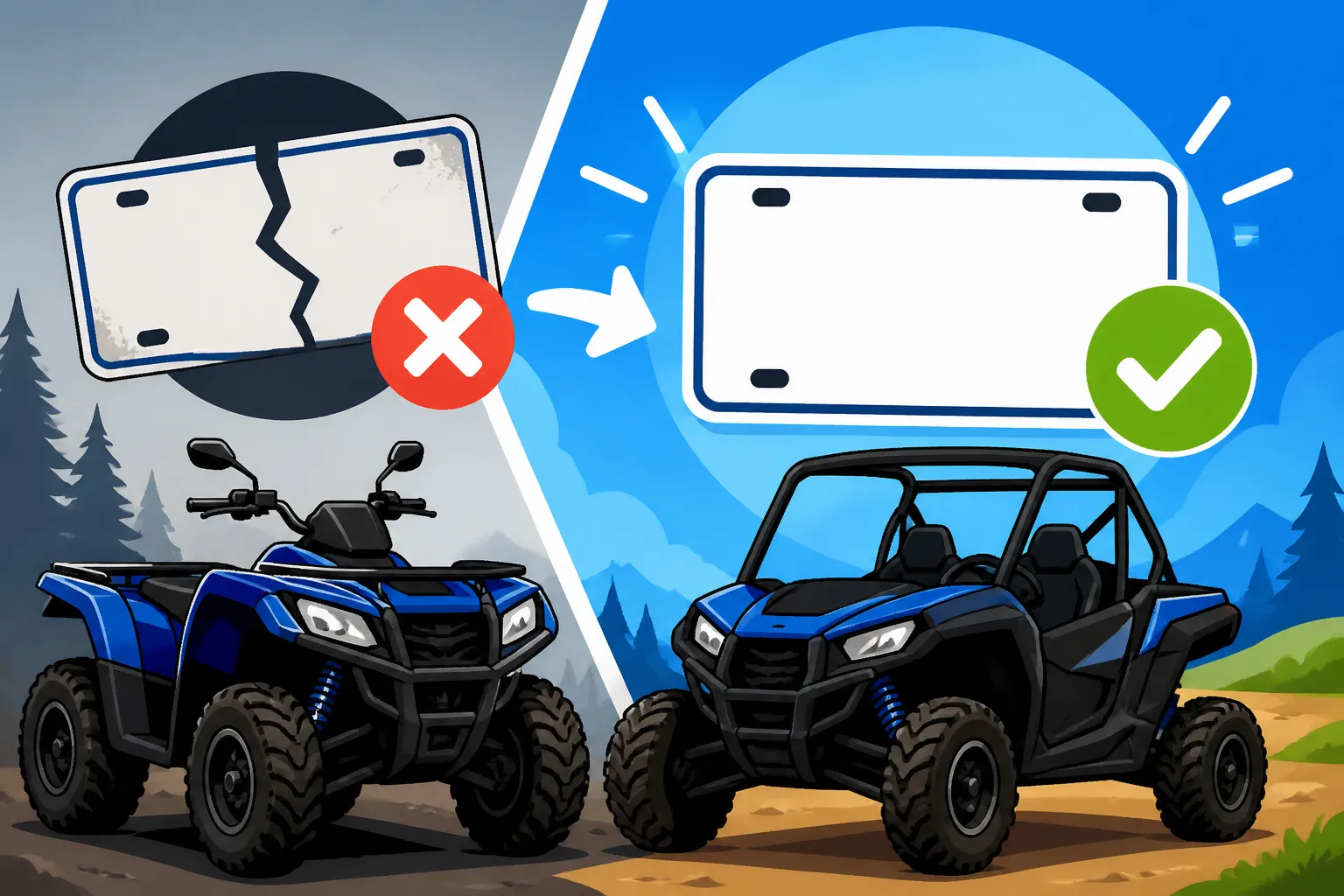
Few things are quite as frustrating when you're gearing up for a ride as realizing your Quebec ATV or side-by-side plate has gone missing. Whether it vibrated off on a rough trail, got snagged by a branch, or simply disappeared, a lost VHR plate can throw a serious wrench into your plans and leave you wondering how to get back on the trails legally. This guide is here to walk you through every step of replacing that missing plate, ensuring you know exactly what to do to get your machine legal and ready for your next adventure.
Why a Missing Plate is a Big Deal
It’s easy to think, "Oh, it's just a little piece of metal," but that plate is far more than just decoration. In Quebec, your VHR (Véhicule Hors Route) plate is your machine's primary identifier, directly linking it to your registration with the Société de l'assurance automobile du Québec (SAAQ). Without it, your off-road machine is essentially operating without proper identification, which can lead to some pretty uncomfortable situations if you're stopped by a trail patrol or police officer.
The Legal Repercussions of a Missing Plate
Riding without a visible, valid SAAQ-issued VHR plate is not just a minor oversight; it's a violation of Quebec's Off-Highway Vehicle Act. The law is quite clear: your machine must be registered and display its plate at all times while on authorized trails or designated access routes. Getting caught without it can result in significant fines. We're not talking about a slap on the wrist here; these penalties are designed to ensure compliance and proper identification for all off-road vehicles. Imagine planning a weekend trip, only to have it cut short by a ticket that could easily have been avoided. It's a real buzzkill. [Quebec Penalties for Riding Unregistered] outlines just how serious these infractions can be, even for something as seemingly small as a missing plate.
Why the SAAQ Cares So Much
The SAAQ isn't just about selling plates; they are the central authority for vehicle registration and, notably, the primary insurer for off-highway vehicles in Quebec. Every VHR plate is tied to an active registration and, by extension, to the mandatory liability insurance that every owner must carry. A missing plate means a potential breakdown in this system. From their perspective, it creates an identification gap that makes it harder to track machines, ensure compliance with [Quebec's Off-Highway Vehicle Act and Your Papers], and, crucially, verify that the mandatory insurance coverage is in place. This helps explain why their process for replacement is designed to verify your identity and ownership before issuing a new one. It's all part of maintaining order and safety on the vast network of Quebec trails. [What the SAAQ Actually Does for Quad Owners] provides more insight into their comprehensive role.
The Immediate Steps to Take When You Realize Your Plate is Gone
That moment of panic when you notice your plate is missing is a familiar one to many of us. But don't just sit there lamenting your luck; there are immediate, practical steps you can take to address the situation and start the replacement process. The sooner you act, the sooner you'll have your new plate in hand and be back on the trails legally.
The Initial Search and Retrace
Before you assume the worst, take a deep breath and retrace your steps. Did you just get off a particularly bumpy section of trail? Did you ride through some dense brush? Sometimes, a plate simply detaches and might be lying along your recent path. Check your machine thoroughly—under the fenders, tangled in suspension components, or perhaps even in a gear bag if it came off while loading or unloading. I've heard stories of riders finding their plate cleverly wedged in an unexpected spot. If you were with a group, ask if anyone noticed anything fall off your machine. A quick but thorough search can sometimes save you a trip to the SAAQ.
When to Report to Police
Most lost plates are simply that: lost. They've fallen off, disappeared, or perhaps were misplaced. However, if you have reason to believe your VHR plate was stolen – maybe your machine was parked somewhere and you found signs of tampering, or other items were also taken – then reporting it to your local police service is absolutely crucial. A police report creates an official record of the theft, which can be important for your own protection in case the plate is used nefariously, and might be requested by the SAAQ, though it's not always a mandatory requirement for a replacement due to loss. If you suspect theft, act quickly to document the incident.
Documenting What Happened
While the SAAQ generally understands that plates get lost, it’s always a good idea to have some personal notes or documentation about the circumstances. Jot down when and where you believe the plate was lost, any steps you took to search for it, and the date you realized it was gone. This isn't usually a formal requirement for the SAAQ, but having this information can help you confidently answer any questions they might have, and it serves as your own personal record. You won't need anything formal like a notarized affidavit for a simple lost plate, but being prepared mentally can streamline the process. For keeping your records organized, whether it's for personal ownership documents or other legal needs related to your machine, resources like LawDepot can be quite useful for creating and managing various forms.
Navigating the SAAQ for a Replacement Plate
Once you've determined your plate is truly gone and you need a new one, your next stop is the SAAQ. While it might feel like a bureaucratic hurdle, the process for replacing a lost VHR plate is fairly straightforward, provided you come prepared. The key is to have all your ducks in a row to avoid multiple trips.
Required Documents for a Replacement
To get a replacement VHR plate, the SAAQ needs to confirm two things: your identity and your ownership of the machine. You'll need to present valid identification and proof that you are indeed the registered owner of the off-road vehicle. Here's what you'll typically need to bring:
- Your Driver's License or Other Photo ID: This is your primary form of identification. Make sure it's valid and shows your current address.
- Your Machine's Registration Certificate: This document proves you are the registered owner of the ATV or side-by-side. It contains important information about your machine and its unique VHR number.
- Proof of Ownership (if requested): While your registration certificate is usually sufficient, in some cases, especially if there are discrepancies or questions, the SAAQ might ask for additional proof, such as your bill of sale. For new residents or those who registered an imported machine, the documentation might be more complex. [Quebec Registration and Proof of Ownership] goes into greater detail about the types of documents that confirm ownership.
I’ve put together a quick table outlining the essential items:
| Document Type | Purpose | Notes |
|---|---|---|
| Photo ID | Verifies your identity | Valid Quebec driver's license preferred; other government ID accepted |
| Registration Cert. | Confirms current registration and ownership | Should be for the ATV/UTV with the lost plate |
| Bill of Sale (Optional) | Secondary proof of ownership, if requested | Useful for your records; tools like LawDepot can help create official-looking documents |
| Payment Method | To cover the replacement plate fee | Debit card, credit card, or cash |
The Replacement Fee Structure
Yes, there is a fee for a replacement plate. The SAAQ charges a modest administrative fee to cover the cost of manufacturing and issuing a new plate. This isn't usually a huge expense, but it's important to be aware of it so you're not caught off guard. Since specific figures can change, it's always best to check the SAAQ's official website or ask at the counter for the current rate for a replacement VHR plate. This fee is separate from your annual registration renewal costs, which you'll encounter again when it's time for [Quebec ATV Registration Renewal Each Year]. It’s a standard fee for replacing any type of vehicle plate, not just off-road ones. You can often pay by debit, credit card, or cash at an SAAQ service counter. For general understanding of fee structures, you might find [Quebec SAAQ Rate Changes for 2025 to 2027] helpful in seeing how the SAAQ communicates its costs.
Getting Your New Plate
Once you've presented your documents and paid the fee, the SAAQ will process your request. In most cases, they will issue you a brand new VHR plate right there on the spot. You'll walk out with a new plate, a new registration certificate reflecting the new plate number (if applicable), and the peace of mind that your machine is once again legally identified. Make sure to double-check the information on the new registration certificate to ensure it matches your machine details correctly before you leave the counter. This is a critical step to avoid any future headaches. You'll want to mount that plate securely as soon as possible. Remember, [Quebec Plate Placement on a Quad] provides guidance on where exactly that new VHR plate needs to go on your machine to be compliant.
Preventing Future Lost Plates
Nobody wants to go through the hassle of replacing a lost plate more than once. The good news is that with a few simple precautions and habits, you can significantly reduce the chances of your VHR plate going missing again. It's all about secure mounting and regular checks.
Secure Mounting Techniques
The most common reason for a lost plate is simply inadequate mounting. Those standard bolts or plastic ties that come with the machine or plate aren't always robust enough for the vibrations and impacts of off-road riding. Here are some tips to keep that plate firmly in place:
- Use Locking Fasteners: Consider using nyloc nuts or thread-locking compound on the bolts that secure your plate. This helps prevent them from vibrating loose over time.
- Rubber Washers: Placing rubber washers on both sides of the plate where the bolts go through can help dampen vibrations and provide a tighter, more secure fit, reducing stress on the plate itself.
- Reinforce the Plate: If your plate is mounted in a spot prone to flexing, consider adding a thin aluminum or plastic backing plate to give it more rigidity. This is especially true for fender mounts that might be a bit flimsy.
- Proper Placement: Ensure your plate is mounted in a highly visible location, typically on the rear fender, and that it's not easily snagged by branches or other obstacles you might encounter on the trail. [Where a VHR Plate Mounts on a Quad] offers detailed advice on this.
Regular Pre-Ride Checks
Making a quick visual inspection of your VHR plate part of your pre-ride routine can save you a lot of trouble. Before every outing, just take a moment to:
- Check the Tightness of Fasteners: Give the plate a gentle tug and ensure the bolts are snug. If you notice any wobble, tighten them up before you hit the trail.
- Inspect for Cracks or Damage: The plate itself can become fatigued or cracked over time, especially around the mounting holes. If you see any signs of wear, consider adding reinforcements or being extra vigilant.
- Clean for Visibility: A muddy or obstructed plate is as good as no plate at all in the eyes of a patrol officer. Make sure it's clean and clearly visible before you head out.
Using a Bill of Sale for Proof
While a bill of sale isn't strictly necessary for replacing a lost plate (your registration certificate does that job), having a clear and complete bill of sale for your machine is always a good practice for your records. It's definitive proof of your purchase and ownership. Should any complex issues arise regarding your machine's identity, ownership, or even a future sale, a well-documented bill of sale is invaluable. For example, if you need to trace back ownership or prove your acquisition, a properly executed bill of sale, perhaps drafted with a template from LawDepot, provides undeniable evidence. This is particularly useful in situations like [Quebec SAAQ Forms for a Private Sale] or [Quebec Registration Transfer After a Sale]. It's about having all your personal paperwork in order for every aspect of your off-road machine ownership.
Disclaimer
This article is for general informational purposes only and does not constitute professional advice. Laws, prices and regulations vary by location and change over time. Consult a qualified professional for guidance on your specific situation.