What Quebec’s Off-Highway Vehicle Act Changed for Owners
For many quad and side-by-side owners across Quebec, the landscape of off-road adventures shifted significantly with the implementation of the updated Off-Highway Vehicle Act, often referred to as the LVHR. If you've been feeling a bit lost or overwhelmed by the changes, wondering what exactly applies to you and your machine now, you're not alone. This guide aims to clear up the confusion, walking you through the critical updates and explaining what they mean for everything from how you register your machine to where you can ride it, ensuring you stay on the right side of the law and enjoy your passion safely.
Understanding Quebec's Off-Highway Vehicle Act (LVHR)
The world of off-road vehicle enthusiasts in Quebec is vibrant, but it also demands a clear framework to ensure safety, minimize environmental impact, and foster respectful coexistence with other land users. The Off-Highway Vehicle Act (LVHR) represents a crucial evolution in this framework, bringing with it a wave of adjustments that have reshaped how we operate our ATVs and UTVs.
The Evolution of Off-Road Legislation
Quebec's journey to the current Off-Highway Vehicle Act wasn't a sudden leap; it was a response to a growing need for more robust regulation in a rapidly expanding sector. For years, older laws, while foundational, simply couldn't keep pace with the increasing popularity of ATVs and side-by-sides, the technological advancements in these machines, and the complex issues that arose, such as trail management, environmental concerns, and safety incidents. The legislative process involved extensive consultations and debates, aiming to strike a balance between allowing enthusiasts to enjoy their sport and protecting public safety and natural spaces. It was about creating a forward-looking act that addressed the realities of modern off-roading, rather than trying to fit a square peg into a round hole with outdated rules. This evolution speaks to a commitment to making off-road activities sustainable and safe for everyone involved, from riders to residents living near trails.
What the LVHR Replaced
To fully appreciate the new act, it helps to understand what it superseded. The Off-Highway Vehicle Act effectively replaced the previous legislation, specifically the "Act respecting off-highway vehicles," which had been in place for quite some time. [What the LVHR Replaced] The older act, while pioneering in its day, simply didn't have the teeth or the scope to tackle many of the issues that had become prevalent. For instance, the original rules often provided less clarity on critical aspects like mandatory insurance minimums, specific age requirements for different types of machines, or the strict conditions under which these vehicles could interact with public roads.
The limitations of the old regime often led to ambiguity, making it challenging for both riders to understand their obligations and for authorities to enforce safety standards consistently. There were often gaps regarding the use of private lands, the role of clubs, and the specific equipment requirements that modern machines demanded. The LVHR was designed to close these gaps, offering a more comprehensive, coherent, and stringent set of regulations that directly addressed these long-standing issues, aiming to reduce accidents and ensure a more responsible riding culture across the province.
Why September 10, 2021 Matters
For every quad and side-by-side owner in Quebec, September 10, 2021, is a date etched into the collective memory. This was the day the new Off-Highway Vehicle Act officially came into full effect, marking a hard line between the old rules and the new. [Why September 10, 2021 Matters] It wasn't a gradual rollout for most of the significant provisions; it was a definitive change that required immediate attention from riders across the province.
The immediate impact was a flurry of questions and, for some, a scramble to ensure compliance. Owners suddenly faced new age restrictions, mandatory driver's licence requirements, and adjusted insurance minimums, all effective on this date. While there was some public information leading up to it, the reality of the changes hitting home was a stark wake-up call for many. It meant that a ride you might have taken casually the week before suddenly had a host of new legal implications if you weren't fully up to speed. This date became a benchmark for understanding whether you were operating under the "old" or "new" set of rules, and it continues to be a critical reference point when discussing off-road vehicle regulations in Quebec.
Key Changes Impacting ATV and UTV Owners
The LVHR brought forth a suite of significant changes, many of which directly altered the responsibilities and requirements for ATV and UTV owners. These aren't just minor tweaks; they fundamentally shift how you prepare your machine, how you ride, and what you need to carry with you.
Mandatory Liability Insurance Threshold
One of the most impactful changes under the new act revolves around liability insurance. Previously, while insurance was mandatory, the minimum coverage might have varied or been set at a lower amount. The LVHR significantly raised the bar, mandating that all owners of off-highway vehicles carry a minimum amount of liability insurance. [Quebec's Liability Insurance Rule] This isn't just a suggestion; it's a non-negotiable requirement for registration and legal operation.
The reasoning behind this increase is rooted in the practical realities of accidents. Off-road vehicle incidents, especially those involving other vehicles, property, or individuals, can result in substantial damages and legal costs. A higher liability floor offers greater protection not only to potential victims but also to the policyholder, preventing catastrophic financial ruin in the event of a serious claim. For owners, this translates directly into a higher, non-negotiable component of your annual operating costs, typically factored into your SAAQ registration. However, it also provides a clearer understanding that your adventures come with a serious responsibility, backed by significant financial protection for potential mishaps. It's a foundational element of responsible off-roading that [The $1 Million Liability Floor Every Owner Carries] helps ensure everyone involved is adequately covered.
Driver's Licence Requirement for All Riders
Perhaps one of the most widely discussed and sometimes confusing changes was the blanket requirement for a driver's licence. The LVHR made it unequivocally clear: if you are operating an off-highway vehicle on a public trail or any area where the act applies, you must possess a valid driver's licence. [Quebec Requires a Driver's Licence Since 2021] This applies to everyone, regardless of age (above the minimums) or experience level.
This change had a profound impact, particularly on younger riders who might have previously operated machines on trails under different, less stringent conditions, or new riders who assumed a licence wasn't necessary for off-road use. The implication is straightforward: if you can't legally drive a car or motorcycle on the road, you generally can't legally operate an ATV or UTV on a federated trail. This aims to ensure that all operators have a foundational understanding of road rules, traffic laws, and general vehicle operation, contributing to a safer riding environment. Failing to have a valid licence can lead to significant fines and immediate penalties, including having your machine impounded, underscoring the seriousness of this requirement. [Quebec Fines for Riding Without a Licence]
Increased Penalties for Non-Compliance
With a more robust and comprehensive act comes a proportionate increase in the consequences for ignoring its provisions. The LVHR significantly ratcheted up the penalties for various infractions, making non-compliance a much costlier affair. Whether it's riding without proper registration, exceeding speed limits, violating age restrictions, or failing to carry the necessary documentation, the fines are now substantially higher than under the previous regime.
For example, infractions that might have previously incurred a relatively minor fine could now set you back hundreds of dollars, sometimes even more, especially for repeat offenses or those deemed particularly dangerous. This isn't about collecting revenue; it's a strategic move to act as a stronger deterrent against reckless or illegal behavior. The act's goal is to compel riders to adhere to safety standards and respect the regulations designed to protect everyone. [Quebec Ticket Costs for Trail Violations] This means every owner must be acutely aware of the rules, as the financial and legal repercussions of non-compliance are now much more severe, emphasizing the importance of informed and responsible riding.
Age Restrictions and Training Requirements
The LVHR brought clarity and, in some cases, new limitations regarding who can operate ATVs and UTVs in Quebec, placing a strong emphasis on age and proper training. These rules are designed to enhance safety, especially for younger riders.
Minimum Age for ATV Operators
For standard ATVs, the Off-Highway Vehicle Act sets a clear minimum age. Riders must be at least 16 years old to operate an ATV on federated trails or public lands where the act applies. [Quebec's Minimum Age of 16 for ATV Riders] However, for those aged 16 and 17, there's an additional requirement: they must hold a valid driver's licence (Class 1 to 5) and have obtained an FQCQ training certificate. This isn't an either/or situation; both are mandatory for this age bracket to legally ride on designated trails.
This dual requirement aims to ensure that young riders not only have the basic knowledge of road safety that comes with a driver's licence but also specific training tailored to the unique challenges and dynamics of off-road vehicle operation. It recognizes that while a 16-year-old might be able to handle an ATV, formal instruction drastically reduces risks. While these rules are strict for public access, it's worth noting that a 15-year-old may operate an off-highway vehicle only on private land with written [Quebec Parental Authorization on Private Land] and under adult supervision, provided the machine is suitable for their size and weight. [Quebec Rules for a 16-Year-Old Rider]
Side-by-Side UTV Specific Age Rule
One of the most distinct changes for multi-passenger off-road vehicles concerns the minimum age for operating side-by-sides (UTVs). The LVHR has established that drivers of side-by-sides must be at least 18 years old. [Quebec Requires 18 for a Side-by-Side] Unlike ATVs, there are no provisions for 16- or 17-year-olds to operate a side-by-side on trails, even with a training certificate or parental consent, when it comes to public access.
This higher age requirement for side-by-sides reflects the different characteristics of these machines. UTVs are typically heavier, faster, and often carry multiple passengers, leading to different handling dynamics and potentially more severe consequences in an accident. The province's aim is to ensure that operators of these larger, more complex machines possess a higher level of maturity, judgment, and driving experience. For families planning outings, this means that even if a 16- or 17-year-old is a capable ATV rider, they absolutely cannot take the wheel of a side-by-side on a federated trail or public land. This distinction is crucial for compliance and safety.
Mandatory Training Certificates
The introduction of mandatory training certificates, specifically for 16 and 17-year-old ATV riders, is a cornerstone of the LVHR's safety initiatives. These certificates, issued by the Fédération Québécoise des Clubs Quads (FQCQ) or an equivalent accredited body, are not just a formality; they represent a commitment to formal safety education. [Quebec FQCQ Training Certificates for Teens] The courses typically cover a wide range of essential topics, including safe riding techniques, understanding trail etiquette, environmental considerations, emergency procedures, and familiarity with the rules of the Off-Highway Vehicle Act itself.
The requirement ensures that young riders receive structured instruction beyond what they might learn from family or friends. It instills crucial knowledge about hazard perception, machine control, and responsible decision-making, which are vital for preventing accidents. Obtaining this certificate is a prerequisite for 16- and 17-year-olds to legally ride an ATV on Quebec's federated trails. Without it, even if they have a driver's licence, they are deemed non-compliant and can face penalties. This emphasis on formalized training underscores the act's dedication to creating a safer and more educated generation of off-road enthusiasts.
Road Access and Trail Regulations
The way off-highway vehicles interact with public roads and trails underwent significant changes with the LVHR, defining much stricter boundaries and conditions.
Limited Road Use and Crossing Rules
Gone are the days when off-road vehicles might have casually used public roads for short stretches. The LVHR has imposed very stringent rules regarding road access, limiting it to highly specific circumstances. Generally, off-highway vehicles are prohibited from public roads, with rare exceptions for very short distances – typically up to one kilometer – to connect two trails, access a service, or bypass an obstacle, provided the segment is clearly signed as authorized by municipal by-law. [Quebec Municipal Road Access Up to 1 Kilometre] Even then, specific conditions apply, such as speed limits and operating on the shoulder where possible.
Crossing public roads is also governed by strict rules. Operators must stop, yield to all traffic, cross at a right angle, and ensure adequate sightlines. These sightlines are critical, with distances like [Quebec Crossing Sightline Distances] specified based on the speed limit of the road being crossed. Furthermore, the act reinforces the rule that off-highway vehicles must maintain a minimum distance of [Quebec's 100 Metre Rule Near Homes] from any dwelling, unless on a specifically authorized trail, to minimize noise disturbance and ensure privacy. These rules are non-negotiable and are heavily enforced to separate off-road vehicle traffic from regular road users and residential areas, enhancing safety for everyone.
Trail Management and Enforcement
The LVHR solidified the role of Quebec's federated clubs in the management and enforcement of its vast trail network. These clubs, powered by thousands of dedicated volunteers, are not just maintaining trails; they are active partners in upholding the act's provisions. Their trail patrols, often recognizable by their uniforms, have specific powers to verify compliance. [What a Club Trail Patroller Can Make You Do] This means they can ask to see your registration, insurance, driver's licence, and, crucially, your trail pass.
The financial health and maintenance of the trail system rely heavily on the sale of these passes, and riding without one is a direct violation of the act. The penalties for riding without a valid trail pass have increased significantly, acting as a strong deterrent. [Quebec Fines for Riding Without a Trail Pass] This enforcement by club volunteers ensures that those who benefit from the trails contribute to their upkeep and adhere to the rules that keep everyone safe and preserve the environment. It underscores the cooperative effort between the provincial government, the FQCQ, and individual clubs to sustain Quebec's unique off-road riding experience.
Prohibited Areas and Special Provisions
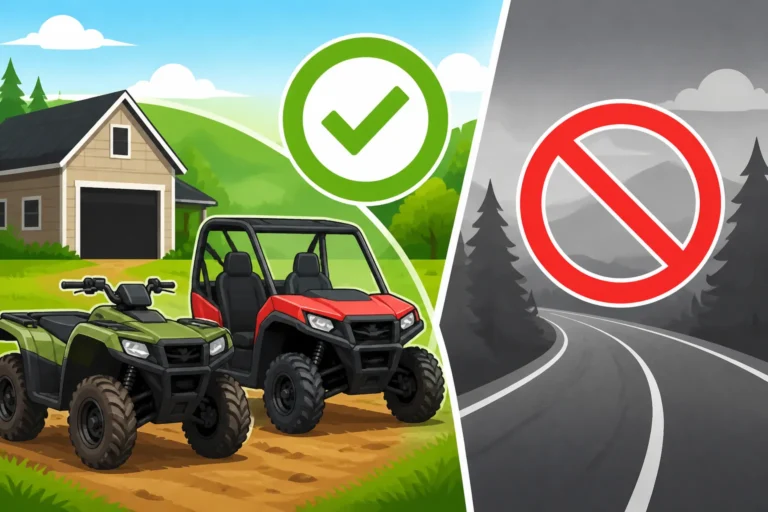
Beyond explicit trail networks and limited road access, the LVHR clarifies and expands upon areas where off-highway vehicle operation is generally prohibited. This includes, but isn't limited to, ecologically sensitive zones, agricultural fields, municipal parks, and certain bodies of water or their shorelines. For instance, riding on a beach is explicitly forbidden unless a rare, specific authorization is granted. [Riding a Quebec Beach on a Quad] The intent is to protect vulnerable ecosystems, private property, and public tranquility.
However, the act also recognizes special circumstances. For certain essential activities, such as [Quebec Registration for a Trapper's Machine] or for farmers operating their equipment on their own land, there can be specific exemptions or provisions that allow for operations that would otherwise be prohibited. These exceptions are typically narrow and require adherence to other safety and environmental guidelines. It's crucial for riders to understand that "off-roading" does not mean "anywhere you please." Always verify local regulations and respect private property boundaries. Ignoring these prohibitions can lead to severe fines, environmental damage charges, and even confiscation of your machine.
Documentation and Compliance
Navigating the world of off-road vehicle ownership in Quebec means being meticulous about your paperwork. The LVHR has put an even greater emphasis on having the correct documents, especially when you're out on the trails or completing a sale.
Carrying Proof of Registration and Insurance
Under the new act, it's more important than ever to have immediate proof of your machine's registration and mandatory liability insurance whenever you're operating it off-road. Whether it's a physical copy in a waterproof pouch or a digital version accessible on your phone, you must be able to present these documents if requested by an authorized person, such as a Sûreté du Québec officer or a federated club patrol member. [Carrying Papers on a Long Ride]
Imagine you're deep in the Laurentians, enjoying a fantastic ride, when you're stopped by a trail patrol. They're not just saying hello; they're verifying compliance. [What a Patrol Can Ask to See] If you can't produce proof of your current SAAQ registration and your mandatory $1 million liability insurance, you could face immediate fines, regardless of whether your papers are technically in order back home. This rule ensures accountability and facilitates quick verification, which is crucial for safety and enforcement across the vast network of trails. It’s a simple but vital step that every owner must take before heading out.
Sales and Transfer of Ownership
The LVHR underscores the importance of proper documentation when buying or selling an off-highway vehicle. Whether you're purchasing from a dealer or engaging in a private sale, the process of transferring ownership must be meticulously followed to ensure that the machine is legally registered in the new owner's name. For private sales, the SAAQ provides specific forms that both the buyer and seller must complete to formalize the transaction and ensure a smooth transfer. [Quebec SAAQ Forms for a Private Sale]
These forms are essential for updating the SAAQ's records and ensuring that the correct individual is responsible for the machine's registration and insurance going forward. Without a proper transfer, the previous owner might still be held liable for any incidents or infractions, or the new owner might struggle to register the machine in their name. The act reinforces that a complete and accurate [Quebec Registration Transfer After a Sale] is not just a formality but a legal necessity, preventing complications and ensuring clear lines of ownership and responsibility for both parties involved.
Importance of a Bill of Sale
While the SAAQ forms handle the official transfer of responsibility, a comprehensive bill of sale is the foundational document for any private transaction involving an ATV or UTV. The LVHR implicitly highlights its importance by tightening registration rules. If you're buying a machine, particularly an older one or from a private seller, and lack a proper bill of sale, you could run into significant hurdles when trying to register it with the SAAQ. [Quebec ATV Registration Without a Bill of Sale] A robust bill of sale should clearly identify the buyer and seller, the machine (make, model, year, VIN/serial number), the sale price, and the date of sale.
This document serves as proof of purchase and establishes a clear chain of ownership, which is vital in resolving any future disputes or proving that you legitimately acquired the machine. Services like LawDepot offer customizable templates for bills of sale and other legal documents that can be incredibly helpful for private transactions, ensuring all necessary details are included to comply with provincial requirements. Having a well-prepared bill of sale, perhaps one you can get from a reputable online legal document provider like LawDepot, can save you immense headaches down the line, ensuring a clean and legally sound transfer of ownership for your off-road vehicle.
Navigating Private Sales After the Act
Private sales of ATVs and UTVs have always required a degree of due diligence, but with the LVHR emphasizing clear ownership and responsibility, understanding the nuances of these transactions is more important than ever.
Verifying Ownership and Liens
When you're eyeing that perfect used quad from a private seller, your first step should always be verifying ownership and checking for any outstanding liens. This means more than just looking at the previous owner's registration paper; it involves a bit of detective work. You want to ensure that the seller is the legal owner of the machine and that there are no financial claims against it. A quick check of the machine's VIN (Vehicle Identification Number) can help you confirm its identity.
Crucially, you should ask the seller for their registration certificate and verify that their name matches the document. You'll also want to investigate whether there's a lien recorded against the machine, meaning it was used as collateral for a loan and still has outstanding debt. If a machine has a lien and you purchase it, that lien could transfer to you, making you responsible for the previous owner's debt. [What a Lienholder on File Means for a Buyer] Services that check for liens are available and highly recommended to avoid inadvertently buying someone else's financial burden. This due diligence ensures you're buying a machine free and clear, protecting your investment.
Preparing a Robust Bill of Sale
For a private sale to be legally sound and hassle-free, a well-crafted bill of sale is non-negotiable for both the buyer and the seller. This document isn't just a receipt; it's a legal contract that outlines the terms of the transaction, protects both parties, and is often required by the SAAQ for registration. It should clearly state: the full names and addresses of both parties, the date of the sale, a detailed description of the off-highway vehicle (make, model, year, VIN, odometer reading if applicable), the agreed-upon sale price, and a declaration that the machine is being sold "as-is" (or any other warranty terms).
Both the buyer and seller must sign and date the document, and it's always a good idea to have a witness, though not strictly mandatory for all provinces. Having a clear, typed document is much better than a hastily scribbled note. Resources like LawDepot offer excellent, customizable templates for legal documents such as a comprehensive bill of sale. Using such a template ensures that all critical information is included and professionally presented, which can be invaluable when dealing with the SAAQ or in case of a future dispute. [Paperwork Two Individuals Sign on a Private Sale] This crucial document solidifies the transaction and is your primary proof of ownership.
Registration Steps Post-Purchase
Once you've found your perfect machine and completed the private sale with a solid bill of sale, the next critical step is to register it in your name with the SAAQ (Société de l'assurance automobile du Québec). This isn't just a recommendation; it's a legal obligation under the LVHR, and you can't legally operate the machine until it's registered to you. To do this, you'll need to visit an SAAQ service outlet with several key documents.
You'll definitely need the bill of sale (or the SAAQ's "Declaration of Sale" form if you used one), the previous owner's registration certificate, and your own proof of identity and residence. The SAAQ will then process the transfer, collect applicable sales tax on the purchase price, and issue a new registration certificate and a VHR (Véhicule Hors Route) plate in your name. [Quebec Registration Transfer After a Sale] It's crucial to do this promptly after the purchase to avoid any legal complications or penalties for riding an unregistered machine. Always confirm the specific documents required directly with the SAAQ or their website before your visit to ensure a smooth and efficient registration process.
Here's a quick comparison of some key changes brought by the LVHR:
| Aspect | Before LVHR (General, prior to Sept 2021) | After LVHR (Effective Sept 2021) |
|---|---|---|
| Mandatory Liability | Often $500,000 (though varied) | Minimum $1,000,000 |
| Driver's Licence | Required for certain roads, not always trails | Mandatory for all public/federated trail use |
| ATV Minimum Age | Often 16 (with nuances) | 16 (with FQCQ certificate for 16-17 year olds); 15 on private land with authorization |
| Side-by-Side Age | Often 16 (with nuances) | 18 (no exceptions for 16-17 year olds on public trails) |
| Road Access | Limited, often less strict 1km rule | Very strict 1 km rule with specific conditions and signage |
| Enforcement | Varied fines, fewer dedicated patrols | Increased fines, more active enforcement by Sûreté du Québec and club patrols |
Disclaimer
This article is for general informational purposes only and does not constitute professional advice. Laws, prices and regulations vary by location and change over time. Consult a qualified professional for guidance on your specific situation.