Quebec Machines Used Only on Private Land
It's a common scenario across Quebec: you've got a quad or a side-by-side, but your intention is strictly to ride it on your own property, perhaps a sprawling piece of land out in the Eastern Townships, or a friend's vast acreage up in Abitibi. The thought immediately comes to mind: "If it never touches a public trail or road, do I really need to go through the hassle of SAAQ registration?" This question, while seemingly straightforward, opens a can of worms for many off-road enthusiasts, leading to confusion, potential fines, and even significant liability issues. This guide will clarify the nuances of owning and operating an ATV or UTV solely on private land in Quebec, helping you understand your obligations and avoid common pitfalls.
Understanding What "Private Land" Truly Means for ATV Use
Before we delve into registration specifics, it's absolutely crucial to have a clear understanding of what "private land" actually entails in the eyes of Quebec law, especially when it comes to off-highway vehicles. It's not always as simple as "my land, my rules."
What Constitutes Truly Private Land?
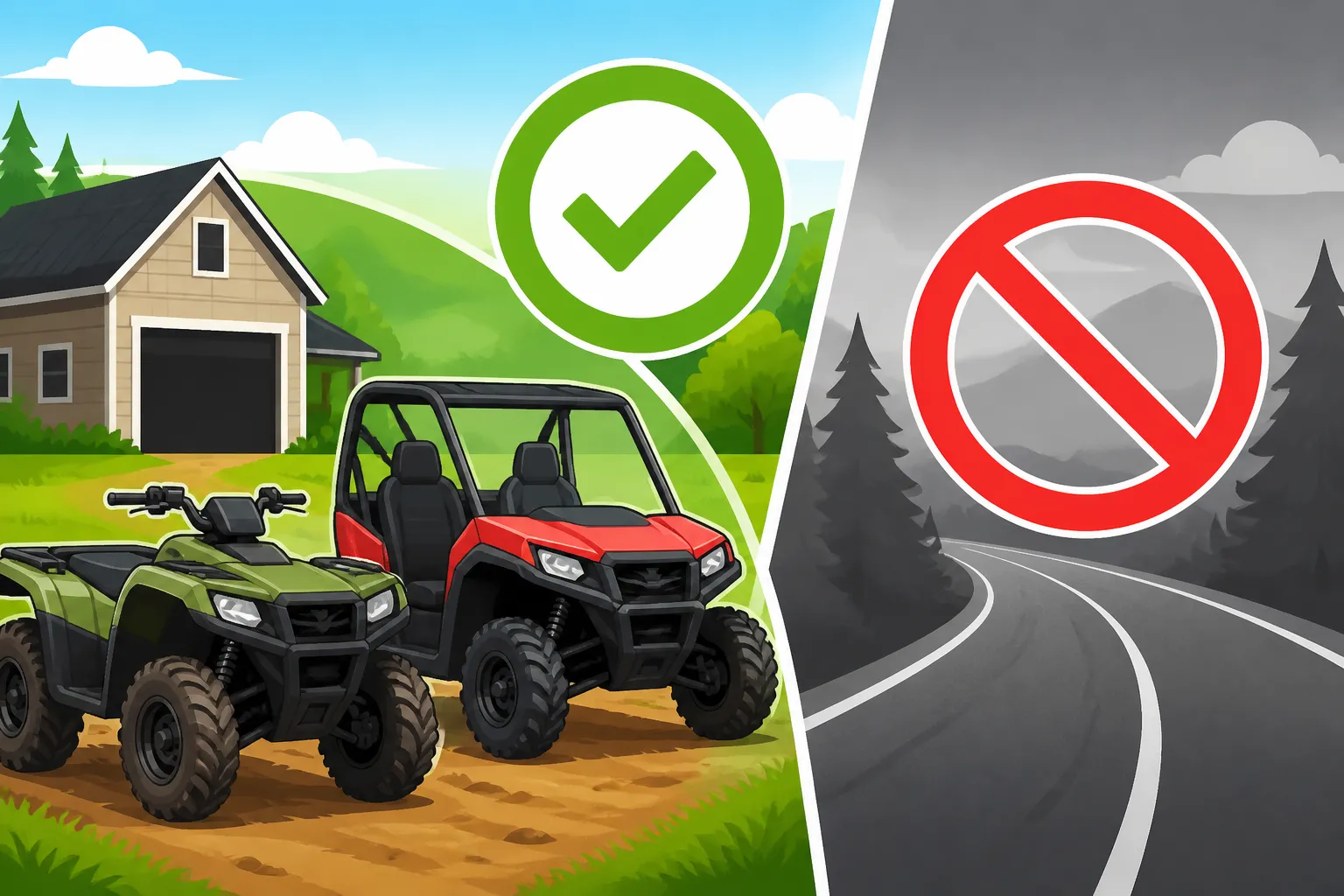
When we talk about truly private land, we're referring to property that is exclusively owned by an individual, family, or private entity, and where no public right-of-way or easement exists. This could be your own residential backyard, a large family farm that has no public access, or a friend's private hunting camp property that is entirely fenced off and isolated. The key here is exclusivity and the absence of any public access, either explicit or implied.
It's vital to differentiate this from Crown land, which is publicly owned, or even private land that has dedicated public easements for things like utility lines or historical trails. Sometimes, even land you think is private might have a municipal road allowance running through it, or a neighbour might have a right-of-way that inadvertently creates a "public" passage. The boundaries of private land can sometimes be blurred by historical use patterns, informal agreements, or simply a lack of clear demarcation. Understanding your property lines and any legal encumbrances is the first step in truly knowing if your land qualifies as exclusively private for ATV use.
The Absolute Necessity of Landowner Permission
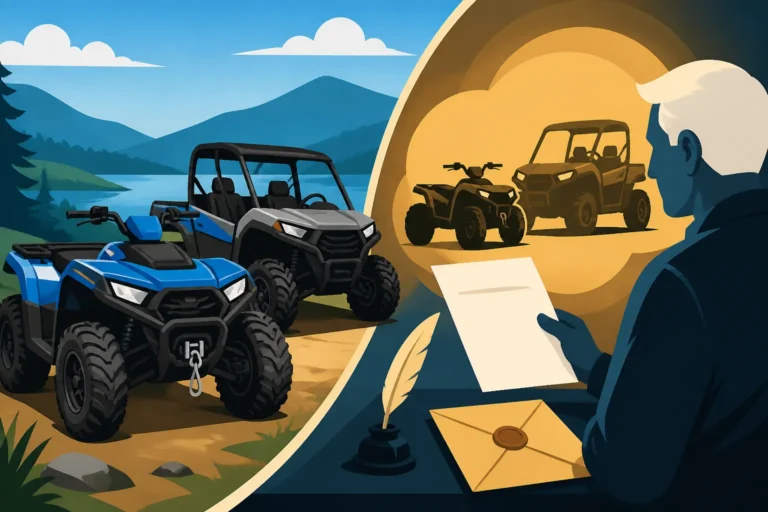
Even if the land you're riding on belongs to a friend or family member, it is still considered "private land" relative to you, the rider, if you don't own it yourself. In such cases, obtaining explicit permission from the landowner is not just a polite courtesy; it's a legal requirement to avoid trespassing charges. Verbal permission is a good start, but in an ideal world, especially if you ride there frequently or if there are any potential disagreements, a written authorization can save a lot of headaches.
This written permission doesn't have to be a complicated legal document. A simple signed letter stating that you, and perhaps others, have permission to operate off-highway vehicles on their specific property (including the cadastral lot numbers) during certain dates or under specific conditions can be incredibly valuable. It clarifies expectations, reduces misunderstandings, and provides a solid defense against any claims of unauthorized use. Remember, even trusted friends can have disputes, and having things in writing offers a layer of protection for everyone involved.
Adjacent Lands, Road Crossings, and the "Grey Zones"
Here's where many private land riders get into trouble. Your private land might be vast, but it's rarely an island. It's often bordered by municipal roads, other private properties, or even public trails. The moment your ATV tire touches anything beyond your explicitly owned private property, even for a brief second, you can technically be subject to the full spectrum of Quebec's off-highway vehicle laws. This includes registration, insurance, and compliance with the [Quebec ATV Road Rules Under the LVHR].
Consider a scenario where your private property is bisected by a small concession road, or you need to cross a short stretch of municipal right-of-way to get from one part of your land to another. Even these brief excursions often require your machine to be properly registered and insured. Quebec law does allow for [Quebec Municipal Road Access Up to 1 Kilometre] under specific conditions, and there are rules for [Quebec Crossing Sightline Distances], but these exceptions require your machine to be fully compliant with SAAQ regulations. A quick hop across a ditch or a five-second ride down a gravel road can easily land you a ticket if your machine isn't legal for public access. It's this proximity to public or other private lands that often makes the "private land only" argument fall apart for many riders.
The SAAQ and Your Private Land Machine: Dispelling Myths
Many ATV owners in Quebec believe that if their machine never leaves private property, it somehow flies under the radar of the Société de l'assurance automobile du Québec (SAAQ). This is a widespread misconception that can lead to significant legal and financial problems. Let's clear this up.
Is SAAQ Registration Always Required in Quebec?
The short answer for most quad and side-by-side owners in Quebec is a resounding yes, even if you intend to ride exclusively on private land. The SAAQ is not just the registrar for vehicles that use public trails; it is the official body responsible for registering all off-highway vehicles (VHRs, or véhicules hors route) in the province. This broad mandate means that ownership of a VHR generally triggers the requirement for registration, regardless of where it is operated.
Think of it this way: the SAAQ's primary role extends beyond simply regulating trail use. It's fundamentally about identifying vehicle ownership and, critically, ensuring that a basic level of liability insurance is in place for all VHRs. The idea that "private land only" exempts you from this foundational requirement is a common misunderstanding. Unless your machine falls into a very specific exemption category (which we'll discuss next), the expectation is that it will be registered. For a deeper dive into the SAAQ's role, you might want to read [What the SAAQ Actually Does for Quad Owners].
The Mandatory Liability Insurance Component
Here's perhaps the most critical reason why SAAQ registration is so vital, even for private land use: it automatically includes mandatory minimum liability insurance. In Quebec, all off-highway vehicles are required to carry a minimum of $1 million in civil liability insurance. This isn't just for accidents on federated trails; it's a blanket requirement intended to protect third parties in case of an incident. [Quebec's Liability Insurance Rule] is clear on this.
Imagine you're riding on your own private land, you lose control, and your machine somehow veers onto a neighbour's property, causing damage or, worse, injuring someone. Or perhaps a visitor on your property is accidentally injured while you're operating your quad. Without SAAQ registration, you would lack this mandatory base level of insurance, leaving you personally exposed to potentially ruinous legal costs and compensation claims. The SAAQ's registration includes this vital protection, making it far more than just a bureaucratic formality. For more details, see [The $1 Million Liability Floor Every Owner Carries]. This liability coverage is a fundamental safety net, not just for the public, but for your own financial well-being, even when you're sticking to your backyard.
Specific Exemptions: Myth vs. Reality
While the general rule is that all off-highway vehicles must be registered with the SAAQ, there are a few very narrow exceptions. However, simply saying "I only ride it on private land" is not one of them. The exemptions typically apply to specific types of use or specialized equipment:
- Farm Machinery: An ATV or UTV used exclusively for agricultural work on a farm may, under strict conditions, be exempt. This isn't just recreational riding on a farm; it must be integral to the farming operation. The vehicle might also need to meet certain definitions of agricultural machinery, which can be quite specific.
- Competitive Use: Machines used exclusively on closed circuits for organized competitions, where the property is entirely private and controlled, might also be exempt. However, this is for dedicated race machines, not your weekend recreational quad.
- Industrial/Commercial Use on Private Property: Similar to farm machinery, a vehicle used strictly within a private industrial site (like a quarry, construction site, or a large private resort's maintenance operation) that never leaves that property might also be exempt.
It's crucial to understand that these exemptions are highly specific and do not apply to the vast majority of recreational quad owners. If you're using your ATV for fun, even if it's only on your own land, it almost certainly requires SAAQ registration. If you believe your machine might fall into one of these niche categories, it is absolutely imperative to confirm directly with the SAAQ to ensure you are compliant. Making assumptions here could lead to severe penalties.
Understanding Proof of Ownership for Private Land Machines
Even if, by some rare chance, your ATV or UTV truly falls into one of the narrow SAAQ registration exemptions for private land use, or if it's a machine like a dirt bike that doesn't typically require SAAQ registration (but still requires liability insurance if used on a public trail or road under specific conditions, though that's a different topic entirely), proof of ownership remains critically important.
Why Proof of Ownership Still Matters
Regardless of whether your machine is SAAQ registered, having undisputed proof that you are the legal owner is fundamental. Here's why:
- Theft and Recovery: In the unfortunate event that your ATV is stolen, solid proof of ownership is essential for reporting the theft to the police and significantly increases your chances of recovery. Without it, the police might be unable to act, and even if your machine is found, proving it's yours can become a bureaucratic nightmare.
- Future Sales or Inheritance: Should you decide to sell your machine, a clear chain of ownership established through proper documentation makes the sale much smoother for both you and the buyer. It also ensures a clean transfer if the machine is inherited. [Quebec Registration Transfer After a Sale] depends on this.
- Insurance Claims (Non-SAAQ Covered): If you have private insurance beyond the SAAQ's mandatory liability (e.g., for collision or comprehensive coverage), your insurer will demand proof of ownership before processing any claims.
- Disputes: In any dispute over ownership, whether with a former spouse, a business partner, or a previous owner, robust documentation is your best defense.
Even for machines that rarely see the light of day, or are tucked away on a remote property, maintaining impeccable records of ownership is a non-negotiable best practice.
Essential Documents for Proving Ownership
So, what exactly constitutes solid proof of ownership for an off-highway vehicle in Quebec?
- Original Bill of Sale/Purchase Invoice: This is the gold standard. It should clearly list the seller, buyer, purchase date, price, and, most importantly, the vehicle identification number (VIN) or serial number. If you bought from a dealer, you'll have a detailed invoice. For private sales, a simple, well-drafted bill of sale is crucial. [Quebec Registration and Proof of Ownership] usually means having this.
- Customs Documents (for imported machines): If you brought your ATV into Quebec from another province or country, you'll have customs declarations or inter-provincial transfer papers that confirm its legal entry and your ownership at that point. [Quebec Registration for an Imported Machine] requires these.
- Previous Registration Certificates: If the machine was previously registered in Quebec or elsewhere, a copy of the previous owner's registration certificate can help establish the chain of title, especially when combined with a bill of sale from that owner.
- Photographs of Serial Numbers: As a preventative measure, always take clear photos of your machine's VIN or serial number immediately after purchase. This is excellent advice for any motorized vehicle. [Photographing a Serial Number Before You Buy] can be a lifesaver if the physical plate becomes damaged or unreadable.
- Lien Records: If you financed your machine, the financing company will have a lien on the vehicle. While not proof of your sole ownership, it's a record that ties you to the machine and can serve as supplementary evidence. [Quebec Registration and Financing Documents] are important here.
Without these documents, proving ownership can become incredibly difficult, especially if you face issues like a stolen machine or a dispute over its rightful owner. What happens if you don't have a bill of sale? [Quebec ATV Registration Without a Bill of Sale] is a complex situation that can be very hard to resolve with the SAAQ.
Drafting a Bill of Sale for Private Transactions
When you're buying or selling an ATV privately, especially one intended for "private land only" use, drafting a comprehensive bill of sale is critical. This document protects both the buyer and the seller. It doesn't have to be a legal tome, but it must contain specific information:
- Date of Sale: When the transaction occurred.
- Seller's Information: Full legal name, address, and contact details.
- Buyer's Information: Full legal name, address, and contact details.
- Vehicle Description: Make, model, year, colour, engine size, and crucially, the VIN/serial number.
- Purchase Price: The agreed-upon amount.
- Payment Method: How the payment was made.
- Condition of Sale: "As-is, where-is" is common in private sales.
- Signatures: Both seller and buyer should sign, and ideally, have their signatures witnessed.
If you're unsure how to start, online resources can be incredibly helpful. Platforms like LawDepot offer customizable bill of sale templates that can guide you through the process, ensuring all necessary fields are included for a legal and binding document. These templates are designed to be user-friendly and can be adapted to specific situations, providing peace of mind for both parties. Using a template from a reputable source like LawDepot can ensure you don't miss any critical details that could complicate ownership transfer later. This is particularly important for machines that might not be immediately registered with the SAAQ, as the bill of sale then becomes the primary proof of your ownership. [Paperwork Two Individuals Sign on a Private Sale] is key.
Liability and Consequences of Non-Compliance on Private Land
Many riders assume that because they're on private property, they're somehow shielded from the full weight of Quebec's legal system. This is a dangerous assumption, especially concerning liability and the consequences of not adhering to basic provincial requirements like SAAQ registration and insurance.
The Legal Ramifications of No Registration and Insurance
Let's be unequivocally clear: operating an off-highway vehicle (VHR) in Quebec without proper SAAQ registration and the accompanying mandatory liability insurance is illegal. The fines for [Quebec Penalties for Riding Unregistered] can be substantial. Even if you briefly leave your private property, inadvertently or intentionally, onto a public road, trail, or even a neighbour's land without permission, you are immediately exposed. A simple trail patrol, a police officer on a routine check, or even an observant citizen reporting your unauthorized presence could lead to a ticket.
Beyond the immediate fines, the real danger lies in an accident scenario. If you're involved in an incident while operating an unregistered and uninsured VHR, even on your own private land, the financial repercussions can be catastrophic. The mandatory $1 million liability insurance included with SAAQ registration is there for a reason: to cover damages or injuries you might cause to third parties. Without it, you are personally responsible for these costs. This could mean paying for property damage, medical bills, lost wages, and pain and suffering out of your own pocket. Think about the long-term impact of a serious injury to a guest or a significant property damage claim to a neighbour – without insurance, your personal assets, including your home and savings, could be at risk.
Personal Liability Beyond SAAQ Minimums
While the SAAQ's mandatory $1 million liability coverage provides a crucial baseline, it's essential to understand that in some severe accidents, even that amount might not be enough. Catastrophic injuries, permanent disabilities, or multiple fatalities could result in legal judgments far exceeding the provincial minimum. This is particularly true if negligence can be proven.
For those with significant assets, or who frequently host guests on their property where ATVs are used, it's wise to consider additional private liability insurance beyond what the SAAQ provides. Many insurance companies offer supplementary policies that can increase your coverage to $2 million, $5 million, or even more, for a relatively modest premium. This additional layer of protection acts as a shield for your personal wealth, ensuring that you're not left financially ruined by an unforeseen incident. Even for purely private land use, it's prudent to discuss your options with a private insurer to ensure you have adequate coverage for your specific situation. [Quebec Insurance Minimum for an Owner] is a floor, not necessarily a ceiling for what you need.
Owner's Responsibility for Other Riders
If you allow someone else to operate your ATV or UTV on your private land, you, as the owner, assume significant responsibility. This is known as "vicarious liability." Even if the other person is an experienced rider, if they cause an accident, you could be held liable for damages or injuries, especially if your machine is unregistered or uninsured.
Here are key aspects of owner responsibility:
- Age and Licence: Quebec has strict [Quebec ATV Age Requirements] and requires a valid driver's licence for anyone operating an ATV on a public trail or road. While private land technically offers more leeway, you still carry a moral and often legal responsibility. Allowing a child under the minimum age (16 for ATVs, 18 for side-by-sides) to operate your machine, even on private land, could lead to severe consequences if an accident occurs. [Quebec Parental Authorization on Private Land] might offer some protection for minors riding on family land, but adult supervision is key.
- Intoxication: Never permit anyone to operate your machine if they are impaired by alcohol or drugs. [Quebec Impaired Riding Penalties] are severe, and as the owner, you could face charges for allowing an impaired person to operate your vehicle.
- Machine Condition: Ensure your machine is in safe operating condition. Don't lend out a quad with faulty brakes, worn tires, or other mechanical issues that could contribute to an accident.
- Instruction: If the rider is inexperienced, provide proper safety instruction, explain the machine's controls, and ensure they understand the terrain.
Essentially, by handing over the keys, you're also handing over a portion of the responsibility. Ensuring your machine is legally compliant (registered and insured) and that any operator is responsible and capable is not just good practice, it's a legal safeguard for you, the owner.
Practical Steps and Best Practices for Private Land ATV Use
Even when your intent is solely to use your ATV or UTV on private land, taking a few proactive steps can save you a world of trouble. It's about being informed, prepared, and prioritizing safety and compliance.
Confirming Your Registration and Insurance Status
The first and most crucial step is to verify that your off-highway vehicle is properly registered with the SAAQ and carries the mandatory liability insurance. Don't just assume it is. If you've recently purchased a machine, especially through a private sale, it's entirely your responsibility to ensure the transfer of ownership and registration are completed correctly. [How to Register an ATV in Quebec] involves specific steps.
You can often check the status of your vehicle's registration through the SAAQ's online services or by visiting one of their service centres. Bring your proof of ownership, like your bill of sale, and the machine's serial number. If you're unsure, ask. A few minutes verifying your status now can prevent a headache (and a hefty fine) later. If you bought a machine from someone who claimed it was "private land only" and therefore unregistered, proceed with caution. It's almost always best to get it properly registered yourself. Remember, [Quebec's SAAQ Is Registrar and Insurer], so these two aspects are tied together for most VHRs.
Ensuring Proper Documentation is Accessible
Even on private land, you might occasionally need to present proof of ownership, registration, or insurance. While you're not usually expected to carry physical papers on the machine while riding on private property, it's incredibly wise to have easily accessible copies. This applies especially if you use your machine at a remote camp or a large farm.
Consider these options:
- Digital Copies: Keep clear photos of your SAAQ registration certificate (the little card), proof of liability insurance, and your bill of sale on your smartphone.
- Laminated Copies: For machines used at a fixed location, like a hunting camp, consider laminating copies of these documents and storing them in a weatherproof container at the camp.
- Home File: Keep the original hard copies in a secure file at your main residence.
The idea is that if, for any reason, you need to prove your ownership or compliance (e.g., if authorities are investigating a noise complaint, or if a minor accident occurs on your property), you can quickly provide the necessary paperwork. While a phone photo may not always count as official proof on a federated trail, as noted in [Does a Phone Photo Count as Proof on Trail?], for a private land scenario where you're not actively being pulled over, it can often suffice to clarify the situation quickly.
Safety First, Regardless of Location
The rules of safe ATV operation don't magically disappear just because you're on private property. In fact, sometimes the perceived freedom of private land can lead to riskier behaviour. Prioritizing safety is paramount, always.
Here are some universal safety best practices:
- Wear a Helmet: Quebec law mandates helmets for all ATV riders on public trails and roads. [Quebec ATV Helmet Rules] are clear. Even on private land, a helmet is your most critical piece of safety gear. Accidents happen, and head injuries can be life-altering.
- Appropriate Gear: Beyond a helmet, wear eye protection, sturdy footwear, long pants, and a long-sleeved shirt. Gloves are also highly recommended.
- Never Ride Impaired: Operating an ATV under the influence of alcohol or drugs is dangerous and illegal, no matter where you are. [Quebec Impaired Riding Penalties] apply to all motorized vehicle operations.
- Ride Within Your Skill Level: Don't attempt stunts or terrain that exceeds your capabilities or the machine's limits.
- Passenger Rules: If your machine is designed for a passenger, ensure they are properly seated and wearing safety gear. Do not carry extra passengers beyond the machine's factory design. [Quebec Rules for Passengers on a Quad] are based on manufacturer specifications.
- Environmental Awareness: Be mindful of your surroundings. Even on private land, excessive noise can bother neighbours. [Quebec Noise Complaints About Quads] can arise even from well-intentioned riding.
By adopting these safety practices, you not only protect yourself and others but also uphold the responsible image of the off-road community, regardless of whether you're on a federated trail or your own sprawling estate.
Here's a quick summary table for common private land scenarios:
| Scenario | SAAQ Registration Required? | Mandatory Liability Insurance? | Proof of Ownership Recommended? | Potential Liability Without Compliance |
|---|---|---|---|---|
| Recreational use on your own land | Yes (in most cases) | Yes | Absolutely | High (fines, personal asset risk) |
| Recreational use on friend/family land | Yes (in most cases) | Yes | Absolutely | High (fines, personal asset risk) |
| Farm work on private farm land | Potentially Exempt | Yes (via SAAQ or private) | Absolutely | Moderate (if not truly exempt) |
| Competitive use on private closed track | Potentially Exempt | Yes (via event/private) | Absolutely | Moderate (if not truly exempt) |
| Briefly crossing public road to access another part of your land | Yes | Yes | Absolutely | Very High (fines, accident risk) |
This table reinforces that, for the vast majority of recreational ATV and UTV owners in Quebec, SAAQ registration and the included mandatory liability insurance are indeed requirements, even with a "private land only" intention. While specific exemptions exist, they are narrow and rarely apply to typical recreational riding. Being informed and compliant protects you, your assets, and the future of off-roading in Quebec.
Disclaimer
This article is for general informational purposes only and does not constitute professional advice. Laws, prices and regulations vary by location and change over time. Consult a qualified professional for guidance on your specific situation.