Quebec ATV Registration for Newcomers
Moving to a new place is always a whirlwind, and if you’re bringing your ATV or side-by-side with you to Quebec, figuring out the local registration rules can feel like trying to solve a Rubik's Cube blindfolded. It’s not just about transferring ownership; Quebec has its own unique system through the SAAQ (Société de l'assurance automobile du Québec) that can be a real head-scratcher for newcomers. This comprehensive guide is designed to cut through the confusion and walk you, step-by-step, through the process of getting your off-road machine properly registered in La Belle Province.
Understanding Quebec's Off-Road Vehicle Landscape for Newcomers
When you first arrive in Quebec with your quad, you might quickly realize that the way things are done here, particularly with vehicle registration, has a distinctly local flavour. What might have been a simple process in your previous home could be a bit more involved, and that's perfectly normal. Quebec has a very specific structure for managing off-road vehicles, and understanding its foundations is the first crucial step for any newcomer.
Why Quebec's Rules Might Feel Different
In many places, vehicle registration and insurance are handled by entirely separate entities. You might go to one government office for your plates and title, and then deal with a private company for your insurance policy. However, Quebec operates under a different model, where the SAAQ plays a unique dual role. It's not just the registrar of vehicles; it's also the primary insurer for basic third-party liability for all vehicles, including your off-road machine. This means that when you register your ATV or side-by-side with the SAAQ, you're not just getting a plate; you're also automatically enrolled in their baseline liability coverage system. This integrated approach can be quite surprising if you're used to a bifurcated system, and it often leads to questions about how much coverage you actually have. The SAAQ's involvement is rooted deeply in the province's legal framework for road and off-road safety, governed by documents like [Quebec's Off-Highway Vehicle Act and Your Papers], which every owner should become familiar with.
This unique structure means that understanding your SAAQ registration isn't just about meeting a legal requirement; it's also about knowing the extent of your primary insurance coverage. For example, if you're coming from a province or state where minimum liability might be $200,000 or $500,000, you'll find that [Quebec's Liability Insurance Rule] sets a higher floor, which is a significant difference. It’s designed to protect all road users and off-road enthusiasts alike, ensuring a basic level of compensation in case of an accident. While this integrated system simplifies some aspects by bundling registration and basic insurance, it also means you’ll need to grasp how these two elements are intrinsically linked when you approach the SAAQ counter for the first time.
Navigating this system successfully requires an open mind and a willingness to learn the local specifics. Don't assume that because something was true where you came from, it will be the same here. Embrace the newness, ask questions at the SAAQ, and remember that many of the regulations are in place to ensure safety and order on Quebec's vast network of trails and roads. Understanding the SAAQ's role from the outset will save you a lot of potential headaches and help you get your machine ready for the trails much faster.
What Exactly is a "VTT" or "VHR" in Quebec?
Before you even step foot into an SAAQ office, it helps to understand the local terminology. In Quebec, your ATV isn't just an "ATV"; it's commonly referred to as a "VTT" or falls under the broader category of a "VHR." These aren't just quirky French translations; they're legal classifications that determine how your machine is registered and regulated. Getting comfortable with these terms will make your interactions with SAAQ staff and fellow riders much smoother.
"VTT" stands for Véhicule Tout-Terrain, which literally translates to "all-terrain vehicle." This is the common, everyday term used to describe what many people outside Quebec call an ATV or quad. So, if you hear someone talking about their "VTT," they're referring to a four-wheeled off-road machine designed for a single rider or, in some cases, a driver and one passenger on an extended seat. The SAAQ officially recognizes this category, and you'll see it reflected in their forms and documentation. Understanding that [Quebec Calls an ATV a VTT] is a small but important detail that shows you're catching on to the local lingo.
The broader term, and one you'll frequently encounter in official SAAQ documents and the Off-Highway Vehicle Act, is "VHR" or Véhicule Hors Route. This translates to "off-highway vehicle" or "off-road vehicle" and encompasses a wider range of machines than just the traditional VTT. This category includes your ATVs (VTTs), but also side-by-sides (sometimes called UTVs or côte-à-côte in Quebec), and even some dirt bikes that are specifically equipped and registered for off-road use within the VHR framework. Essentially, if it's a motorized vehicle primarily designed for off-road use and requires specific registration for trails, it's a VHR. The distinction is important because while VTTs are a type of VHR, the VHR classification covers the full spectrum of machines that fall under the SAAQ's off-road regulations, as explored in [Quebec's VHR Vehicle Class]. When you get your plate, you'll notice it's often referred to as a "VHR plate," which visually reinforces this broader categorization. Knowing these terms isn't just academic; it helps you accurately describe your machine and understand the specific rules that apply to it.
Essential Documents for Newcomers Registering an ATV in Quebec
Registering an ATV in Quebec as a newcomer isn't just about showing up; it's about showing up prepared. The SAAQ is meticulous when it comes to paperwork, and rightly so, as they are both the registrar and a crucial insurer. Having all your ducks in a row with the correct documentation can save you immense frustration and multiple trips to the service counter. This section will walk you through the non-negotiables you need to bring.
Proof of Ownership – More Than Just a Bill of Sale
For many, proof of ownership might simply mean a bill of sale. While a bill of sale is certainly critical, especially if you've recently purchased your machine, for an out-of-province ATV, the SAAQ often looks for a more comprehensive ownership history. They want to establish a clear chain of title to ensure the machine isn't stolen or subject to other legal encumbrances. This means you'll need the original registration or title document from your previous jurisdiction.
If you're moving from a Canadian province, this would typically be your provincial registration certificate, showing you as the owner. If you're coming from the United States, you'll need the original Certificate of Title. This document is paramount as it legally establishes you as the rightful owner and details the vehicle's specifications. The SAAQ uses this to verify the VIN (Vehicle Identification Number) and other crucial details about your machine. Without this original title or registration, you could face significant delays or even be unable to register your ATV. It’s always best to have the physical original; copies might not suffice for this initial registration. If you've been pondering [Quebec Registration and Proof of Ownership], this original document is the linchpin.
What if you don't have an original title? This can be a tricky situation. Perhaps the machine is older, and titles weren't issued in your previous jurisdiction for off-road vehicles, or maybe the document has been lost. In such cases, the SAAQ might require additional proofs, such as a sworn affidavit of ownership. This is where tools like LawDepot can be incredibly helpful for creating a legally sound document that attests to your ownership history and explains any missing paperwork. Having a comprehensive [Quebec Registration Without a Bill of Sale] can be challenging, but a carefully drafted affidavit, coupled with other supporting evidence like past registration renewals or insurance policies in your name, can sometimes bridge the gap. Be prepared for extra scrutiny and possibly longer processing times if your ownership documentation isn't perfectly straightforward.
Proof of Residency and Identification
Beyond proving you own the ATV, you need to prove you are a legitimate resident of Quebec and that you are who you say you are. This isn't just a formality; it's essential for establishing your eligibility for Quebec registration and connecting you to the province's legal and insurance systems. Without these proofs, the SAAQ simply can't process your request.
First, you'll need valid identification. This typically means a Canadian driver's license (preferably a Quebec driver's license if you've already obtained one), a passport, or another government-issued photo ID. The key here is that it needs to be current and clearly identify you. If you don't yet have a Quebec driver's license, that's okay for the registration process, but be aware that you will need a valid Quebec driver's license to legally operate your ATV on trails and permitted roads once it's registered. The SAAQ takes driving qualifications seriously, as highlighted in rules like [Quebec Requires a Driver's Licence Since 2021].
Secondly, you must demonstrate proof of your Quebec residency. This ensures that you are indeed living in the province and are eligible for its services. Accepted documents typically include a recent utility bill (electricity, gas, internet), a lease agreement for your Quebec residence, a property tax bill, or official correspondence from a government agency addressed to you at your Quebec address. The document should be current, usually within the last 90 days, and clearly display your name and Quebec address. Make sure the name on your proof of residency matches your identification exactly. For those who are literally brand new to the province, accumulating these documents can take a little time, but they are absolutely necessary for procedures like [Quebec Registration for a New Resident].
Your Machine's Details and Inspection Needs
When you register an off-road vehicle in Quebec, the SAAQ needs to know precise details about the machine itself. This is critical for accurate record-keeping, ensuring the vehicle meets safety standards, and assigning the correct registration category and fees. The most important piece of information about your machine is its Vehicle Identification Number (VIN).
The VIN is a unique 17-character code that identifies your specific ATV or side-by-side. It’s like the machine’s fingerprint. You’ll find it stamped on the frame, usually in an easily accessible location like near the front wheel, under the seat, or on the lower frame rails. The SAAQ clerk will need to verify this VIN, and it will be recorded on your registration certificate. It’s crucial that the VIN on your machine matches the VIN on your proof of ownership documents (previous title/registration, bill of sale). Any discrepancy could trigger further investigation and significant delays. Before you head to the SAAQ, locate your VIN, clean it if necessary, and perhaps even take a photo of it. This can prevent any last-minute fumbling at the counter.
Generally, for standard ATVs and side-by-sides being brought in from another jurisdiction, the SAAQ does not require a physical inspection of the machine itself. They rely on the VIN and the ownership documents to verify its legitimacy. However, there are exceptions. If your machine has a history of significant modifications, or if there's any ambiguity regarding the VIN (for example, if it's illegible, has been tampered with, or if you're dealing with [Quebec Registration When the Serial Is Gone]), the SAAQ might request a technical verification or a police inspection to confirm its identity. This is rare for a straightforward transfer, but it's something to be aware of if your machine has an unusual history. Ensure your machine is generally in safe operating condition, even if an inspection isn't mandatory, as it reflects on your responsibility as an owner.
The Step-by-Step Registration Process for New Arrivals
Okay, you've gathered your documents, you understand the lingo, and now it's time to tackle the actual registration. For newcomers, this isn't usually something you can do with a few clicks online. The initial registration of an out-of-province off-road vehicle typically requires a visit to an SAAQ service counter. This might seem like an extra hurdle, but it's often the most efficient way to ensure all your unique newcomer circumstances are addressed correctly.
Visiting the SAAQ Service Counter
For most new Quebec residents bringing in an off-road vehicle from another jurisdiction, an in-person visit to an SAAQ service counter is not just recommended, it’s usually mandatory for the first-time registration. This is because the SAAQ needs to verify original documents, input new information into their system, and address any unique situations that might arise from an out-of-province transfer. While Quebec residents can often renew their ATV registrations online in subsequent years, that initial setup requires a face-to-face interaction. Think of it as establishing your vehicle's identity within the Quebec system.
Before you go, it's a good idea to check the SAAQ website for the nearest service centre and their operating hours. Some locations might require appointments, especially in busier urban areas, while others operate on a walk-in basis. Always allow ample time for your visit; these transactions can sometimes take a while, especially if there are questions about your documentation. Having a clear idea of [Documents to Bring to a Service Counter] (as outlined in the previous section) will help speed things along, but unforeseen questions can always pop up. Don't be afraid to ask questions yourself if anything is unclear – the SAAQ clerks are there to guide you through the process.
During your visit, the SAAQ clerk will review all your original documents: your previous registration/title, bill of sale, identification, and proof of Quebec residency. They will enter your machine's details, including the VIN, into the Quebec system. This is a critical point where any discrepancies or missing information will come to light. Being polite and patient can go a long way. Remember, they are processing your request based on established provincial regulations, and their goal is to ensure everything is done correctly and legally. It might feel like a lot of paperwork, but this foundational step is vital for your ATV's legal status in Quebec.
Filling Out the Necessary Forms
While the SAAQ clerk will largely guide you through the process and input information directly into their computer system, there might be specific forms you need to complete or sign. Don't worry, you won't be handed a thick packet of incomprehensible paperwork; generally, it's more about confirming details and declaring certain facts.
One of the key forms you might interact with, even if it's for an existing machine, is related to the declaration of a vehicle and, importantly, the sales tax. Even if you paid sales tax in your previous jurisdiction and are therefore exempt from additional Quebec Sales Tax (QST) on the purchase, you will still need to declare the vehicle and its value. This helps the SAAQ assess whether any QST is applicable based on provincial guidelines for vehicles brought into Quebec. The forms for a private sale, such as those discussed in [Quebec SAAQ Forms for a Private Sale], often serve as templates or contain similar sections that you'll need to confirm even if you're not technically "selling" the machine in Quebec, but rather importing it as a new resident's property. LawDepot can be a useful resource if you need to draft any supporting documentation, like an affidavit of value, in advance.
The clerk will typically prompt you for signatures on various declarations confirming the accuracy of the information provided, acknowledging the SAAQ's liability insurance coverage, and consenting to the registration. Pay close attention to what you're signing and don't hesitate to ask for clarification if a particular section is unclear. These forms are legal documents, and your signature confirms your agreement to the terms and accuracy of the details. The process is designed to be as streamlined as possible, but your active participation and attention to detail are important to ensure a smooth registration from start to finish.
Paying Fees and Receiving Your Plate
Once all the paperwork is verified and processed, the final step in registering your ATV as a newcomer is the payment of fees and, arguably the most exciting part, receiving your new Quebec VHR plate and registration certificate. This signifies that your machine is now officially recognized and legal for use on Quebec's trails and permitted roadways.
The fees associated with Quebec ATV registration are generally straightforward, but it's crucial to understand what they cover. Primarily, you'll be paying an annual registration fee that also includes the mandatory basic third-party liability insurance provided by the SAAQ. This insurance automatically meets [The $1 Million Liability Floor Every Owner Carries], which is a significant protective measure. The cost of these fees can vary slightly year to year, so it's always wise to check the current rates before your visit. You can learn more about the breakdowns in articles like [Quebec ATV Registration Costs Explained] and keep an eye on adjustments like those detailed in [Quebec SAAQ Rate Changes for 2025 to 2027].
In addition to the registration and insurance fees, be prepared for potential Quebec Sales Tax (QST) if you recently purchased the machine outside Quebec and haven't paid an equivalent provincial sales tax that's recognized by Quebec. The SAAQ acts as the collection agent for QST in these scenarios. Once all fees are paid, usually by debit or credit card, the SAAQ clerk will issue your distinctive VHR plate. This plate is smaller than a car plate and is designed to fit on the rear fender of your off-road machine. Along with the plate, you'll receive your official Quebec registration certificate, which is a vital document you must carry with you when riding. This certificate confirms your ownership, the machine's details, and its registration status. Congratulations – you’re now officially a Quebec VHR owner!
Navigating Sales Tax and Insurance as a Newcomer
Beyond simply getting your machine registered, understanding Quebec's approach to sales tax and liability insurance is paramount for newcomers. These aspects aren't just minor details; they significantly impact your financial obligations and legal protection when operating your off-road vehicle in the province. Ignoring them can lead to unexpected costs or inadequate coverage.
Understanding Quebec Sales Tax (QST) on Your ATV
Sales tax can be one of the trickiest parts of bringing a vehicle into a new province. In Quebec, the provincial sales tax, known as QST (Quebec Sales Tax), applies to most goods and services, including vehicles. When you're a newcomer registering an ATV, the question often arises: do I have to pay QST again if I already paid sales tax in my previous province or state?
Generally, if you genuinely moved to Quebec and had already owned and paid sales tax on your ATV in another Canadian province that has a reciprocal tax agreement with Quebec, you typically won't have to pay QST a second time on the original purchase price. However, you will still need to declare the vehicle and provide proof that sales tax was previously paid. The SAAQ will verify this information. The situation gets a bit more complex if you're coming from a jurisdiction with no sales tax, or from the United States, where sales tax rules differ significantly. In such cases, Quebec typically requires QST to be paid on the current market value of the machine at the time of registration in Quebec. This is crucial for understanding your [Quebec Sales Tax on an ATV Purchase] obligations.
The SAAQ acts as the collection agent for QST during the registration process. This means that if QST is deemed applicable, you'll pay it directly at the service counter when you register your ATV. It's not something you deal with separately. This can sometimes be a surprise cost for newcomers who weren't expecting it, especially if they're used to different tax rules. For instance, if you recently bought your ATV in a private sale outside Quebec and didn't pay any sales tax on it to a provincial government, be prepared for the SAAQ to assess QST on its estimated value. For a deeper dive into these scenarios, reviewing articles like [Quebec Tax on an Out-of-Province Purchase] can provide clarity. Always bring any proof of purchase or previous tax payment to the SAAQ to help them accurately assess your situation.
The Mandatory Liability Insurance Through the SAAQ
One of the most distinctive features of Quebec's vehicle registration system, which often surprises newcomers, is the SAAQ's role as an insurer. When you register your ATV, you're not just getting a plate; you're also automatically enrolled in a basic third-party liability insurance scheme administered by the SAAQ. This is not optional; it's bundled directly into your annual registration fee.
This mandatory SAAQ liability insurance provides crucial financial protection for damages your ATV might cause to other people or their property in the event of an accident where you are at fault. The coverage limit is significant: [The $1 Million Liability Floor Every Owner Carries]. This means that if you accidentally damage another vehicle, property, or injure another person while operating your registered ATV, the SAAQ's basic coverage is there to protect you up to $1 million. This is a higher minimum than many other jurisdictions, providing a robust baseline of protection for everyone involved in off-road activities. Understanding [Quebec's Liability Insurance Rule] is foundational for every ATV owner in the province.
It's important to grasp that this SAAQ coverage is strictly third-party liability. It does not cover damage to your own ATV, nor does it cover theft, fire, vandalism, or personal injury to yourself. It's a fundamental layer of protection for others. Your registration certificate, which you must carry with you while riding, serves as your proof of this SAAQ liability coverage. So, while you're effectively getting [Insurance Bought With the Registration], it's vital to recognize its limitations and plan for additional coverage if you want to protect your own investment. Many newcomers find this integrated insurance model a bit different from what they're used to, but it's a core component of Quebec's approach to vehicle responsibility.
Considering Additional Private Insurance
While the SAAQ provides mandatory third-party liability coverage for your ATV, it's crucial for newcomers to understand that this is just the bare minimum. As discussed, the SAAQ's coverage protects others from damage or injury caused by your machine; it offers no protection for your investment. This is where private insurance comes into play, and it's something every responsible ATV owner in Quebec should seriously consider.
Think about it: what happens if your brand-new side-by-side rolls over on a trail? Or if it's stolen from your garage? Or catches fire due to an electrical malfunction? The SAAQ will not cover any of these scenarios. For peace of mind and financial protection against these common risks, you'll need to purchase a separate, comprehensive insurance policy from a private provider. These policies typically offer coverage for collision, comprehensive risks (like fire, theft, vandalism), and often additional liability beyond the SAAQ's minimum, providing an extra layer of security.
When shopping for private insurance, it's a good idea to get [Quebec Insurance Quotes for a Quad] from several different providers. Factors like the type of machine, its age, your riding experience, where it's stored, and even your claims history can influence premiums. Make sure to clearly explain that your ATV is already covered for basic third-party liability by the SAAQ, as the private insurer will primarily be providing "own damage" coverage (collision and comprehensive) and potentially excess liability. Don't overlook this step; investing in a private policy protects your asset and helps you avoid significant out-of-pocket expenses should something unfortunate happen. It's an essential part of responsible ATV ownership in Quebec, especially for newcomers who are still finding their feet.
Common Pitfalls and Special Situations for Newcomers
Registering an off-road vehicle as a newcomer in Quebec can be a straightforward process if you have all your documents in order and understand the system. However, life isn't always that simple, and newcomers sometimes encounter specific challenges or have situations that deviate from the norm. Being aware of these potential pitfalls can help you prepare or know what to do if you hit a snag.
Missing or Incomplete Documentation
One of the most frequent headaches newcomers face at the SAAQ counter is dealing with missing or incomplete documentation. The SAAQ is quite strict when it comes to verifying ownership and vehicle details. If you don't have the original title from your previous jurisdiction, a clear bill of sale, or if the VIN is unreadable, it can bring your registration process to a screeching halt.
What should you do if you find yourself in this predicament? First, don't panic, but be prepared for extra steps. If the original title is simply lost, you might need to contact the motor vehicle department in your previous province or state to request a duplicate. This can take time. If titles weren't issued for off-road vehicles in your prior home, or if you bought the machine many years ago and the paperwork is long gone, you'll need to provide alternative proofs of ownership. This might include previous registration renewals in your name, old insurance policies, or even a sworn affidavit. This is where creating a formal document using a service like LawDepot can be invaluable. An affidavit can legally attest to the history of ownership and explain why certain documents are unavailable, giving the SAAQ clerk more information to work with.
In more extreme cases, such as dealing with [Quebec Machines With No Paperwork] at all, you might be required to get a police report confirming the machine isn't stolen, or even undergo a more thorough vehicle inspection to verify its identity. The key here is proactive communication. If you anticipate missing documents, call the SAAQ beforehand or consult with them to understand their specific requirements for your situation. Having as much supporting evidence as possible, even if it's not the original title, will greatly improve your chances of a successful registration, albeit potentially with a few extra steps.
Registering a Machine Purchased Privately from Outside Quebec
For newcomers, the process of registering an ATV purchased privately from outside Quebec follows many of the same steps as bringing your existing machine, but with added emphasis on specific aspects. The SAAQ needs to ensure the sale was legitimate and that you, as the new owner, are correctly declared.
The most critical document in this scenario, beyond the previous owner's title or registration, is a robust bill of sale. This bill of sale should clearly identify both the buyer and seller, the full VIN of the machine, the purchase price, and the date of sale. It should ideally be signed by both parties and, if possible, witnessed. A comprehensive bill of sale, especially one drafted with clear legal language (perhaps using a template from a service like LawDepot), can significantly smooth the process. It helps establish the transfer of ownership and is vital for the SAAQ to assess any applicable Quebec Sales Tax (QST). Without a proper bill of sale, verifying the purchase can become a significant hurdle.
When you bring a privately purchased machine from outside Quebec, whether it's [Registering an Ontario Quad After You Move] or [Importing a Quad Into Quebec From the United States], you'll still need all your personal identification and proof of Quebec residency. The SAAQ will treat this much like a transfer of ownership, combined with an out-of-province import. Be prepared for questions about the purchase price and where the transaction took place, as this impacts the QST assessment. Having all your ducks in a row – the previous owner's original title, a detailed bill of sale, and your personal documents – will make this specific scenario much less stressful and get you on the trails faster.
Understanding Quebec's Unique Off-Road Vehicle Act
For newcomers, simply registering your ATV is only half the battle. Once your machine is legal, you need to understand the rules governing how and where you can ride it in Quebec. Quebec has a very specific and often quite stringent Off-Highway Vehicle Act (LVHR) that can differ significantly from regulations in other jurisdictions. Ignorance of these rules is not an excuse, and fines can be substantial.
One of the most notable differences newcomers often encounter relates to [Quebec ATV Road Rules Under the LVHR]. Unlike some places where ATVs might have broader road access, Quebec generally restricts off-road vehicles from public roads. There are very specific exceptions, such as crossing a road at a right angle, or using a short, designated municipal road segment (typically up to 1 kilometre) to connect trails, provided it's properly signed. Riding along a highway shoulder or using an undesignated road to get to a gas station can lead to hefty fines. Understanding these limitations is critical for staying legal and safe.
Furthermore, Quebec has strict age requirements for ATV operators. For instance, [Quebec ATV Age Requirements] dictate a minimum age of 16 for ATVs, and even 18 for side-by-sides. If you have younger riders in your family who were allowed to ride in your previous home, this might be a significant adjustment. There are also specific rules about helmets ([Quebec ATV Helmet Rules]), passenger capacity, and speed limits on trails ([Quebec ATV Speed Limit on Trails]). It's not enough to just know these rules; you need to adhere to them. Before your first ride, take the time to thoroughly review the Off-Highway Vehicle Act and, if possible, speak with a local ATV club for guidance. They are an invaluable resource for understanding local nuances and ensuring you enjoy Quebec’s extensive trail network responsibly.
After Registration: What Every Newcomer Needs to Know
So, you've successfully navigated the SAAQ, paid your fees, and have your shiny new VHR plate in hand. Congratulations! But your journey as a Quebec off-road vehicle owner doesn't end there. There are crucial post-registration responsibilities and considerations that every newcomer needs to be aware of to ensure continued compliance and enjoyment of Quebec's vast trail network.
Displaying Your VHR Plate and Carrying Your Papers
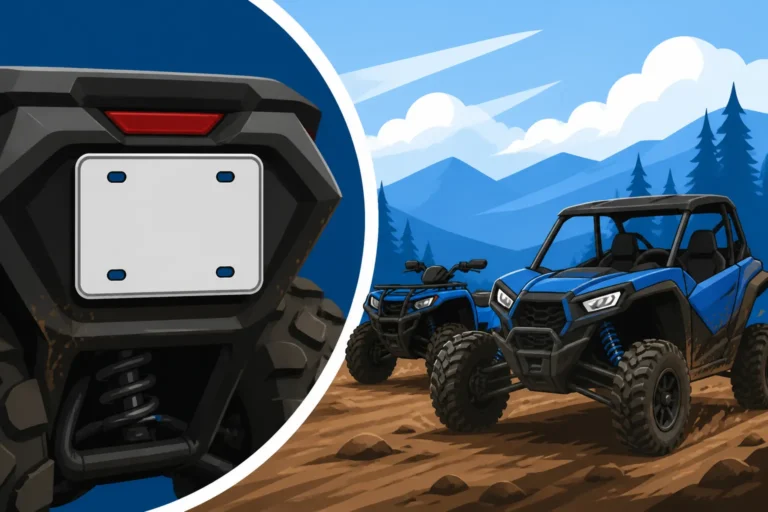
Once you receive your Quebec VHR plate, it's not just a souvenir – it's a critical identifier for your machine. Proper display of the plate is mandatory, and there are specific requirements to ensure it's visible and correctly mounted. The VHR plate must be securely affixed to the rear of your ATV or side-by-side, typically on the rear fender or a dedicated plate bracket. It needs to be kept clean and unobstructed so that it can be easily read by law enforcement, trail patrols, or anyone else who needs to identify your machine. Attempting to hide or improperly mount your plate can result in fines and trouble with authorities. For specifics, always refer to guidelines like [Quebec Plate Placement on a Quad].
Equally important is the requirement to carry your registration certificate and proof of SAAQ liability insurance whenever you are operating your off-road machine. These documents are your legal proof that the ATV is registered and insured in Quebec. Trail patrols, police officers, or even conservation officers have the right to ask to see these papers. A physical copy is generally preferred, although some might accept a clear digital photo on your phone in certain circumstances, it's safer to have the paper originals. Losing these documents or failing to produce them when requested can lead to citations and penalties. So, before every ride, make it a habit to double-check that your wallet or a waterproof container on your machine contains all your essential paperwork, as discussed in [Carrying Papers on a Long Ride]. This small habit can save you a lot of hassle down the road.
Annual Renewal and Future Steps
Your initial registration as a newcomer is a one-time process, but the registration of your ATV itself is an annual commitment. Unlike some vehicle registrations that might be valid for multiple years, Quebec's VHR registrations must be renewed yearly. This annual renewal ensures that your machine remains registered with the SAAQ and that its mandatory liability insurance coverage remains active.
Typically, the SAAQ will send you a renewal notice in the mail a few weeks before your registration is due to expire. These notices will outline the fees for the upcoming year and provide instructions on how to renew. While your initial registration required an in-person visit, subsequent annual renewals are often much simpler. Many owners choose to renew their [Quebec ATV Registration Renewal Each Year] online through the SAAQ's website, which is usually the quickest and most convenient method. You can also renew at an SAAQ service counter or, in some cases, at authorized agents. Make sure to keep your address updated with the SAAQ so you receive your [Quebec Registration Renewal Notices] without fail.
Missing your renewal date can have serious consequences. Riding an unregistered machine means you are operating illegally, and importantly, you are not covered by the SAAQ's mandatory liability insurance. This exposes you to significant financial risk in case of an accident and can lead to substantial fines. It's a good practice to note your renewal date and perhaps even set a reminder on your phone or calendar, independent of the SAAQ's mailed notice, to ensure you never miss it. Staying on top of your annual renewal is a fundamental part of responsible ATV ownership in Quebec.
Trail Passes and Club Memberships
Finally, for newcomers eager to explore Quebec's legendary network of off-road trails, understanding the system of trail passes and club memberships is absolutely essential. Your SAAQ registration makes your machine street legal (in the limited sense that VHRs are street legal), but it does not grant you access to the vast majority of managed trails. For that, you need a separate trail pass.
Quebec boasts an incredible 25,000 kilometres of federated ATV trails, primarily managed by the Fédération Québécoise des Clubs Quads (FQCQ) and its member clubs. To ride on these official, maintained trails, you are required to purchase an FQCQ trail pass. This pass acts as your permission to use the network and contributes directly to the maintenance, signage, and overall management of the trails. It's an investment in the infrastructure you'll be enjoying. You can find detailed information on pricing and options in guides like [Quebec Trail Pass Prices for 2025 to 2026].
Trail passes are typically sold online through the FQCQ website. There are various options, including annual passes, summer passes, and even daily or three-day passes for visitors or those making shorter trips. When you purchase an annual pass, it usually includes membership in a local ATV club, which is fantastic for connecting with other riders and getting local trail information. It's crucial to understand that your SAAQ registration and your FQCQ trail pass are two separate requirements, both mandatory for legal trail riding. You can learn more about how to get yours by checking out resources like [How to Buy a Quebec Trail Pass]. Before you head out on your first Quebec trail adventure, make sure your VHR plate is displayed, your SAAQ registration is current, and your FQCQ trail pass is prominently affixed to your machine. Happy trails!
| Document Type | Required for Newcomers | Notes |
|---|---|---|
| Proof of Ownership | ||
| Original Title/Reg. | Yes | From previous province/state. Shows clear ownership chain. |
| Bill of Sale | Yes (if applicable) | If recently purchased, especially from a private seller. Must be clear and complete. LawDepot can assist with templates. |
| Affidavit of Ownership | Yes (if no title) | If original title is lost or was never issued. Must clearly explain ownership history. |
| Proof of Identity | ||
| Photo ID | Yes | Valid Quebec driver's license, passport, or other government-issued photo ID. |
| Proof of Residency | ||
| Utility Bill | Yes | Current (within 90 days) showing your name and Quebec address. |
| Lease Agreement | Yes | For your Quebec residence. |
| Machine Details | ||
| Vehicle ID Number (VIN) | Yes | Located on the machine's frame. Must match ownership documents. |
| Payment for Fees | ||
| Debit/Credit Card | Yes | For registration, SAAQ liability insurance, and any applicable Quebec Sales Tax (QST). |
Disclaimer
This article is for general informational purposes only and does not constitute professional advice. Laws, prices and regulations vary by location and change over time. Consult a qualified professional for guidance on your specific situation.