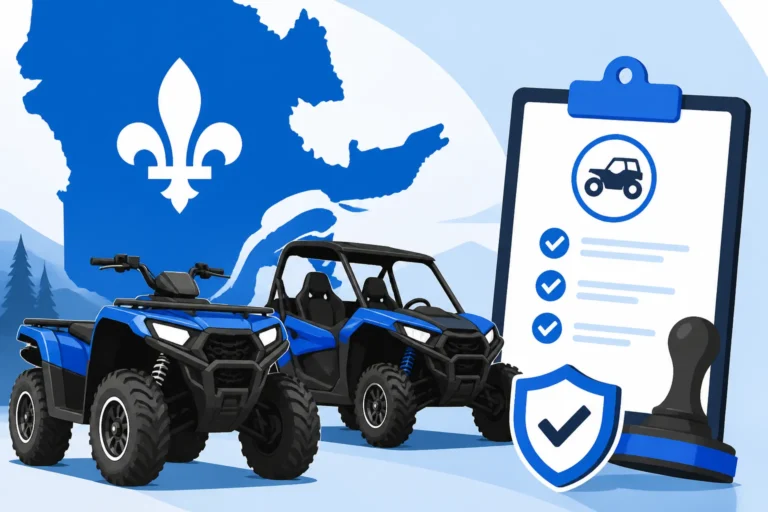
What VHR Stands For
It can be incredibly confusing to navigate the world of ATV and UTV ownership in Quebec, especially when you encounter all sorts of acronyms and terms that don't seem to line up. Many riders know their machine as an ATV or a quad, or maybe even a side-by-side, but then you hear things like "VHR plate" or "VTT." This guide will cut through the jargon and clearly explain what VHR stands for, why it matters, and how it impacts you as an off-road enthusiast in Quebec.
Decoding the Acronym: What VHR Actually Means
When you start digging into the official paperwork for your off-road machine in Quebec, whether it's an ATV, a UTV, or even a dirt bike, you'll inevitably come across the acronym "VHR." For many, it's just another set of letters on a form, but understanding what it stands for is key to grasping how your machine is officially categorized and regulated in the province.
VHR is the French abbreviation for Véhicule Hors Route, which directly translates to Off-Highway Vehicle in English. This is the official and legal term used by the Société de l'assurance automobile du Québec (SAAQ), the provincial body responsible for vehicle registration and insurance. So, while you might call your machine a quad, an ATV, or a side-by-side in everyday conversation, the SAAQ classifies it under the broader umbrella of "Véhicule Hors Route." This distinction is important because it dictates how your machine is treated under the law, from registration requirements to insurance mandates. It's not just a fancy name; it's the fundamental legal classification that underpins everything else about owning and operating these vehicles in Quebec.
The Broader Scope of "Off-Highway Vehicle"
When the SAAQ uses the term VHR, it's not just talking about your typical recreational ATV. The "Off-Highway Vehicle" umbrella is actually quite wide, encompassing a variety of machines designed for use off paved roads. This includes things like two-wheel dirt bikes, three-wheel ATVs (though these are less common now), four-wheel ATVs (the most popular "quads"), and side-by-sides (sometimes called UTVs or "Côte-à-Côte"). It even extends to some specialized vehicles like certain amphibious machines. The common thread among all these is their design purpose: to operate on trails, unpaved surfaces, and off-road terrain, rather than as primary transportation on public roads.
This broad definition is why you see a single type of registration plate, the distinctive square [Quebec VHR Plates Explained], issued for all these different machines. The SAAQ isn't concerned with the specific make or model as much as it is with the machine's fundamental characteristic as an off-highway vehicle. This standardization simplifies the administrative process, ensuring that regardless of the exact type of off-road vehicle you own, it falls under the same regulatory framework concerning registration, safety, and insurance. It's a pragmatic approach to managing a diverse fleet of recreational and utility vehicles.
VHR vs. VTT: Why the Difference Matters
You've probably heard your ATV referred to as a "VTT" more times than you can count, especially if you spend any time on Quebec trails or in French-speaking communities. VTT stands for Véhicule Tout Terrain, which translates to All-Terrain Vehicle. This term, while widely used and understood by the public and even embedded in the name of the province's main federation (FQCQ – Fédération Québécoise des Clubs Quads), is actually more of a colloquial or common-use term. When it comes to official government documents, legislative texts, and SAAQ communications, VHR is the reigning champion.
The difference, though seemingly subtle, is crucial. VTT is what most people call their quad, but VHR is what the SAAQ classifies it as. Think of it like this: you might call your dog a "furball," but its official breed name is something entirely different. The SAAQ's use of VHR reinforces the legal framework of the [Quebec's Off-Highway Vehicle Act and Your Papers], which specifically refers to "Véhicules Hors Route." This means that when you're dealing with registration, insurance claims, or legal matters, the VHR designation is the one that carries legal weight. Understanding this distinction helps you interpret official documents correctly and ensures you're using the right terminology when interacting with authorities or reading regulations. It's not about being pedantic; it's about being accurate within the legal and administrative context.
Why Quebec Uses VHR for Your Off-Road Machine
Quebec's choice to use "VHR" as its official classification for off-highway vehicles, rather than just "ATV" or "VTT," is rooted in a desire for clarity, comprehensive regulation, and effective administration. It's more than just a preference for French terminology; it's a strategic decision that shapes how all off-road machines are handled across the province.
A Unified Classification for Diverse Machines
Imagine if the SAAQ had to create a separate category and set of rules for every single type of off-road vehicle: one for quads, another for side-by-sides, a third for dirt bikes, and so on. It would be an administrative nightmare! By adopting the broad "Véhicule Hors Route" (VHR) classification, Quebec has created a unified framework that applies to all machines designed for off-pavement use. This simplifies the entire regulatory process. Whether you're registering a compact ATV for solo rides or a four-seat side-by-side for family adventures, the core requirements for registration, insurance, and adherence to the [Quebec's Off-Highway Vehicle Act and Your Papers] remain consistent under the VHR designation.
This standardization ensures that no matter what kind of off-road machine you own, you know exactly where it stands in the eyes of the law. It makes it easier for the SAAQ to manage records, for law enforcement to enforce regulations, and for owners to understand their obligations. It also helps in situations where a new type of off-road vehicle might emerge; as long as it fits the "off-highway" criteria, it slots neatly into the existing VHR classification without needing entirely new legislation.
The Role of the SAAQ as Registrar and Insurer
The SAAQ (Société de l'assurance automobile du Québec) plays a unique dual role in Quebec: it's not just the registrar of vehicles but also the mandatory public insurer for bodily injury liability for all motor vehicles, including off-highway ones. This dual function further explains the need for a precise, official classification like VHR. When you register your machine with the SAAQ, you're not just getting a plate; you're also automatically enrolled in the basic public liability insurance program for any bodily injuries you might cause in an accident. [Quebec's SAAQ Is Registrar and Insurer] is a unique system that demands clear categorization.
Because the SAAQ is responsible for both the administrative side (registration, plates) and the insurance side (bodily injury coverage), having a clear, overarching legal definition for all these machines is paramount. The VHR classification ensures that all off-highway vehicles are consistently identified, registered, and covered under the SAAQ's mandate. This structured approach helps in data collection, accident analysis, and policy development, all crucial aspects of maintaining public safety and managing the provincial insurance fund. It ensures that every VHR owner contributes to and benefits from this system, regardless of their specific machine type.
The Practical Impact of a VHR Designation on Owners
Understanding that your machine is officially a "VHR" by the SAAQ isn't just an academic exercise. This designation has tangible, everyday implications for you as an off-road enthusiast in Quebec. From the moment you purchase your machine to every ride you take, the VHR classification dictates many of the rules and responsibilities you'll encounter.
Registration and Plates
The most immediate practical impact of the VHR designation is on your machine's registration. In Quebec, every off-highway vehicle (VHR) that is operated anywhere other than entirely on private land you own or lease must be registered with the SAAQ. This means getting a [Quebec ATV Registration With the SAAQ] and receiving a specific VHR plate. This isn't just a suggestion; it's a legal requirement under the [Quebec's Off-Highway Vehicle Act and Your Papers]. Without this registration, you cannot legally ride on federated trails, municipal roads where permitted, or any public land.
The VHR plate itself is designed to fit onto the fender of an off-road machine, indicating its official status. It's typically smaller and less obtrusive than a car license plate, specifically engineered for the unique shape and usage of these vehicles. This plate serves as visible proof that your machine is registered and that you've fulfilled the basic legal requirements to operate it. If you're buying a machine, you'll need to ensure the previous owner's VHR registration is properly transferred or that you register a new machine within a specific timeframe. Companies like LawDepot can offer templates for bills of sale to ensure you have proper documentation for the transfer process, which is critical for SAAQ registration.
Here's a quick look at common VHR registration actions:
| Action | Description | Key Document/Requirement |
|---|---|---|
| New Registration | Required for newly purchased machines (new or used) before first use on public land or federated trails. | Proof of ownership (e.g., bill of sale), SAAQ form, ID. |
| Registration Transfer | When buying a used VHR, the previous owner's registration must be transferred to your name. | Signed bill of sale, previous registration certificate. |
| Annual Renewal | VHR registrations must be renewed yearly to remain valid. | Renewal notice from SAAQ, payment. |
| Plate Replacement | If your VHR plate is lost, stolen, or damaged, you must obtain a replacement from the SAAQ. | Declaration of loss/theft, application form. |
Mandatory Liability Insurance
Another critical aspect tied directly to the VHR designation is mandatory liability insurance. In Quebec, all registered VHRs automatically come with a basic level of public liability insurance through the SAAQ that covers bodily injury. This is a fundamental part of the province's no-fault insurance system for victims of road accidents, which extends to off-highway vehicles. Beyond this SAAQ-provided coverage, most VHR owners also choose to purchase additional private liability insurance, often for a much higher amount, to cover property damage or more extensive bodily injury claims. For example, [Quebec Liability Minimum Rose to $1 Million] for private coverage.
When a VHR is registered, the SAAQ's component of insurance is automatically included. This means that if you're involved in an accident and cause bodily injury to another person, the SAAQ's public fund steps in. However, this coverage doesn't extend to damage to your own machine, or to property damage you might cause to others. That's why private insurance is so vital. Reputable insurers will offer policies specifically tailored for VHRs, ensuring you're protected against a broader range of risks. Always carry proof of your private [Quebec Insurance Proof on the Machine] when you ride.
Compliance with the Off-Highway Vehicle Act
Ultimately, the VHR designation is the foundation upon which Quebec's entire regulatory framework for off-road vehicles is built. The "Off-Highway Vehicle Act" (or Loi sur les véhicules hors route in French) outlines everything from minimum age requirements and helmet laws to speed limits and where you can or cannot ride. Every rule and every fine stipulated in this act applies directly to machines classified as VHRs. [What Quebec's Off-Highway Vehicle Act Changed for Owners] is a crucial read for any owner.
For example, the Act specifies that VHRs must not be operated on public roads unless specifically authorized, such as for short distances to access trails or fuel. It also details the necessary equipment for your machine, like working headlights and taillights for night riding, and a muffler that meets noise standards. Ignoring these regulations can lead to hefty fines and potentially the seizure of your machine. It's not enough to simply register your VHR; you must also be aware of and adhere to the operational rules set forth in the Act. Having a clear understanding of the VHR designation helps you appreciate the scope and intent of these laws, making you a more responsible and compliant rider. If you're drafting any agreements for machine usage or sales, understanding the specific legal terms can be vital, and resources like LawDepot can provide templates that reflect legally recognized terminology.
Navigating VHR Registration: What You Need to Know
Once you understand that your off-road machine is a VHR in Quebec, the next logical step is to ensure you're compliant with all registration requirements. This isn't just about avoiding fines; it's about being a responsible member of the off-road community and ensuring you're legally protected on the trails.
The Registration Process: From Purchase to Plate
Registering a VHR in Quebec, whether it's a brand new side-by-side from a dealer or a used ATV from a private seller, follows a clear process. For a new machine, the dealer often handles a significant portion of the SAAQ paperwork for you, making the process relatively smooth. They'll typically submit the necessary documents, and you'll receive your registration and plate shortly after. With a private sale, the responsibility falls squarely on your shoulders. You'll need to gather documents like a [Quebec Registration and Proof of Ownership] (often a bill of sale), proof of identity, and proof of residence. Templates from LawDepot can be very helpful here to create a legally sound bill of sale. You then take these to an SAAQ service counter to complete the [Quebec ATV Registration With the SAAQ].
The SAAQ clerk will verify all your documents, collect any applicable sales tax, and process your registration. You'll pay the registration fee, which includes the mandatory public liability insurance. Once complete, you'll receive your VHR registration certificate and the physical plate, which you then need to affix to your machine. It’s important to remember that you can't just ride off with a "for sale" sign; the machine needs to be properly registered in your name before it touches any public land or federated trail. The SAAQ processing time is usually quite quick for in-person registrations, meaning you can often walk out with your plate the same day.
Annual Renewal and Staying Current
Just like any other registered vehicle in Quebec, your VHR registration isn't a one-time affair. It requires [Quebec ATV Registration Renewal Each Year]. The SAAQ will send you a renewal notice, typically by mail, well in advance of your registration expiry date. This notice will detail the amount due and provide instructions on how to renew, which can often be done online, through financial institutions, or in person at an SAAQ service counter. It's crucial not to let your registration lapse, as riding an unregistered VHR can lead to significant fines.
Staying current with your registration ensures that you maintain your legal right to ride on designated trails and that your mandatory SAAQ liability insurance remains active. If you ever sell your machine, a current registration makes the transfer process much smoother for the new owner. Missing a renewal notice is not an excuse for riding with an expired plate, so it's a good practice to note your expiry date or ensure your mailing address with the SAAQ is always up to date so you receive those [Quebec Registration Renewal Notices].
Exceptions to VHR Registration
While the general rule is that all VHRs need to be registered, there are a couple of very specific exceptions. The most common one applies to machines used exclusively on private land that you own or lease. If your ATV or side-by-side literally never leaves your private property – whether it's a large farm, a remote cabin, or just your backyard – then it doesn't need to be registered with the SAAQ. This exemption exists because the machine isn't interacting with public spaces or federated trails, and therefore doesn't fall under the same public safety and insurance mandates.
However, this exception comes with a huge caveat: "exclusively" means absolutely no venturing onto public roads, municipal land, or federated trails, even for a few meters. As soon as a VHR touches any public domain, it needs to be registered. [Quebec Machines Used Only on Private Land] outlines this in more detail. Another less common exception applies to certain specialized equipment or competitive racing machines that operate solely in controlled environments. For the vast majority of recreational riders, however, registration is a non-negotiable step to enjoy the thousands of kilometers of [Quebec ATV Trails: The FQCQ Network] Quebec has to offer.
Disclaimer
This article is for general informational purposes only and does not constitute professional advice. Laws, prices and regulations vary by location and change over time. Consult a qualified professional for guidance on your specific situation.